Why Choose a Fluid Bed Dryer for Your Production Line?

A fluid bed dryer can turn a wet, uneven feed into a more consistent powder by suspending particles in a controlled stream of heated air. The visible signs are practical: particles move freely, moisture leaves across the bed, and operators can monitor inlet temperature, airflow, and product conditions. That performance depends on the material, though. Fine particles may behave differently from coarse granules, and a dryer that works well for one formulation may not suit another.

Powder technology researcher David Geldart is known for classifying powders by how they fluidize. His work offers a useful principle for equipment selection: understand the powder’s behavior before choosing the process. This is a summary of that principle, not a verified quotation. It matters on the production floor, where a change in particle size or moisture can affect fluidization, drying time, and batch consistency.

A fluid bed system can support efficient heat and mass transfer, but it is not an automatic fix. Operators still need to validate airflow, loading, temperature, and endpoint criteria with representative product trials. The less convenient truth is that scale-up can expose problems hidden in a small test unit. Ask for material-specific data, inspect cleaning requirements, and compare energy use with your current process. Those checks help determine whether a fluid bed dryer fits the production line, rather than merely looking suitable on paper.
Why Choose a Fluid Bed Dryer for Your Production Line?

Understanding How a Fluid Bed Dryer Works

Why Choose a Fluid Bed Dryer for Your Production Line?

Understanding How a Fluid Bed Dryer Works

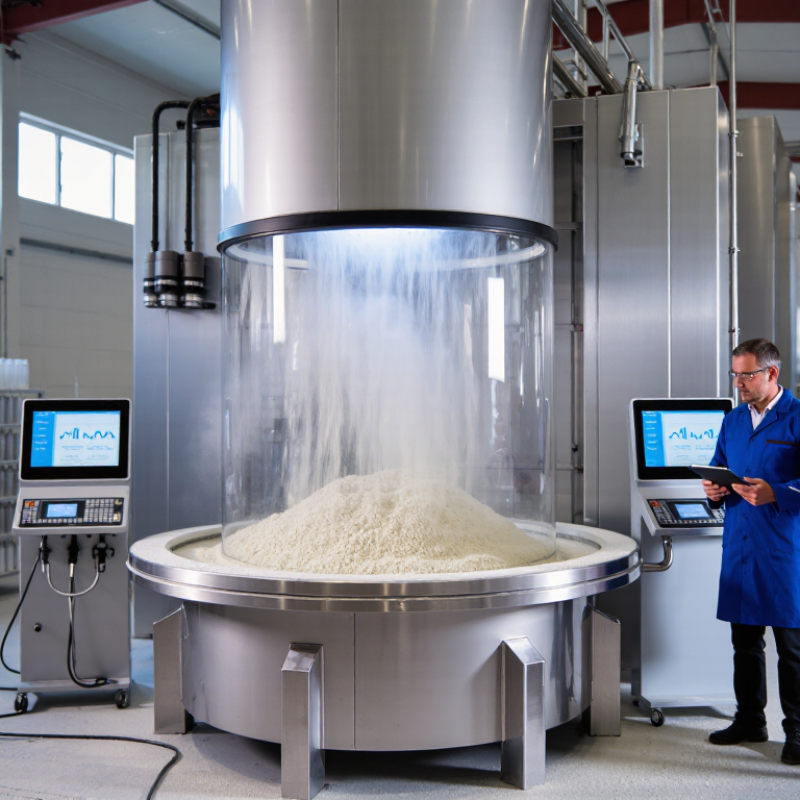
A fluid bed dryer moves heated air upward through a perforated plate, lifting and separating wet particles. When airflow reaches the material’s minimum fluidization velocity, the bed behaves like a gently moving fluid. Each granule meets warm air across much of its surface, which supports rapid heat and moisture transfer. It is a practical setup for powders and granules that can flow freely. Sticky, fragile, or uneven particles may not behave so neatly.

The control point is the balance between airflow, temperature, and particle movement. Too little air leaves damp pockets near the plate. Too much can carry fine particles into the exhaust. NIST water-property data puts the latent heat of vaporization near 2.26 MJ per kilogram at 100°C; that energy must come from the drying air or another heat source. This is a useful physical reference, not a promise of plant-level energy use. Actual consumption depends on incoming moisture, exhaust losses, and heat recovery. The European Commission’s Food, Drink and Milk Industries BREF describes fluidized-bed drying among established industrial drying methods, while emphasizing that process choice depends on product and operating conditions. A small trial can reveal what a specification sheet misses: some batches fluidize unevenly.
Why Choose a Fluid Bed Dryer for Your Production Line?

Understanding How a Fluid Bed Dryer Works

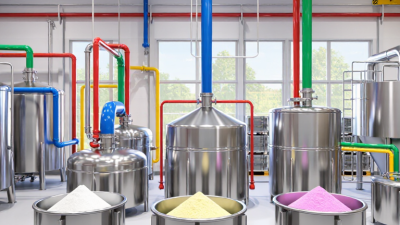
Heated air passes upward through a bed of particles, suspending and mixing them to promote consistent heat and mass transfer. This illustrative batch profile shows moisture content falling over time; actual drying curves depend on the material, particle size, inlet-air conditions, and equipment settings.

Examining the Main Components of a Fluid Bed Dryer

Why Choose a Fluid Bed Dryer for Your Production Line?

A fluid bed dryer works by lifting wet particles with heated air, creating a moving, exposed product layer. Its performance depends on several connected components. The air distributor spreads inlet air across the bed; uneven flow can leave damp pockets or carry fine particles into the filters.

A technical review in Mujumdar’s Handbook of Industrial Drying describes fluidized-bed heat-transfer coefficients commonly in the hundreds of watts per square metre per kelvin, though actual values vary with particle size, airflow, and operating conditions. That range helps explain the equipment’s rapid heat transfer, but it is not a guaranteed production rate.

The air-handling unit sets temperature and flow, while the chamber provides space for stable fluidization. Product probes track temperature; differential-pressure readings help operators notice changes in bed resistance. The exhaust filters capture entrained powder, and their cleaning system must match the material’s dust load.

Small details matter. A poorly positioned probe can report inlet conditions instead of product conditions. The European Commission’s 2019 Best Available Techniques reference document for food, drink and milk industries identifies drying as an energy-intensive operation, making insulation, airflow control, and heat recovery worth reviewing during equipment selection.

Yet a dryer is not automatically efficient. Trials with the actual product are still needed to check moisture uniformity, fines loss, and cleaning time.

Comparing Fluid Bed Drying with Other Methods

Why Choose a Fluid Bed Dryer for Your Production Line?

Comparing Fluid Bed Drying with Other Methods

Choosing a dryer depends on the material, batch size, and required moisture level. A fluid bed dryer moves heated air through a bed of particles, lifting and mixing them as they dry. This creates broad contact between air and material. In suitable applications, drying can be relatively fast and even. The process is often used for powders and granules that can move freely without clumping.

Tray dryers use stationary layers, so heat and moisture may vary between trays or across a thick layer. They can suit smaller batches or materials that should not be agitated, but drying may take longer. Rotary dryers handle larger quantities and robust materials, though tumbling can be unsuitable for fragile particles. No method wins every time. A fluid bed can also create dust, and sticky or irregular feed may not fluidize consistently. That detail is easy to underestimate.

Before selecting equipment, test the actual material at realistic moisture levels. Watch for changes in particle size, temperature sensitivity, and discharge behavior. Airflow, bed depth, and inlet temperature all affect performance. A small trial may reveal channeling or clumping that a specification sheet will not. Even then, scale-up needs careful review; the production bed may behave differently from a sample unit. Dryness alone is not enough. Consider product quality, cleaning, energy use, and handling needs together.

Assessing the Production Benefits of Fluid Bed Dryers

A fluid bed dryer can improve production when a process needs fast, even moisture removal. Heated air passes through perforated plates and lifts the particles, exposing more surface area to the airflow. In a well-set system, operators can monitor inlet and outlet temperatures, airflow, and product moisture. The result can be a more consistent batch, with less reliance on prolonged tray drying. Small changes matter.

Production benefits depend on the material, not just the machine. Particle size, moisture level, and heat sensitivity affect how the bed behaves. A fine powder may become airborne, while heavier granules may need more airflow to fluidize evenly. Test runs help establish practical settings and reveal whether filters, loading levels, or discharge steps need adjustment. They take time.

Drying time and energy use should be measured across comparable batches before making performance claims. Operators should also check moisture samples from different points in the discharge; one reading can miss uneven drying. Cleaning and changeover time belong in the production assessment too. These details are easy to underestimate. A fluid bed dryer may increase throughput, but only when its operating range fits the product and the line around it.

Identifying Key Factors When Choosing a Fluid Bed Dryer

Why Choose a Fluid Bed Dryer for Your Production Line?

Choosing a fluid bed dryer starts with the material, not the machine. Check particle size, moisture range, heat sensitivity, and whether the powder tends to clump. A fluidized bed needs particles that air can lift and mix evenly. Fine particles may escape with exhaust air; sticky material may form lumps. Both issues can reduce drying consistency. Ask for trials using your own material and record inlet temperature, airflow, outlet moisture, and batch time.

Energy deserves close attention. The U.S. Department of Energy’s Advanced Manufacturing Office reports that process heating accounts for about 51% of energy used in U.S. manufacturing. That figure covers many processes, not fluid bed dryers alone, but it shows why heat recovery, insulation, and exhaust control matter. Compare energy use per kilogram of water removed, not just the dryer’s rated capacity. Also check cleaning access, filter replacement, noise, and how easily operators can change recipes. Small details count.

Tips: Request a product-specific trial. Review the moisture results, not only the average. A few wet pockets can cause rework. And be cautious: a faster cycle is not automatically a better one if product quality shifts between batches.

Why Choose a Fluid Bed Dryer for Your Production Line? - Identifying Key Factors When Choosing a Fluid Bed Dryer
Selection Factor What to Assess Why It Matters Practical Checks
Material properties Particle size, density, moisture content, cohesiveness, friability, and heat sensitivity Fluidization and drying performance depend on how the particles respond to upward airflow and heat. Test representative material batches; check for entrainment, agglomeration, and particle damage.
Required throughput Batch size or continuous feed rate, operating hours, and production variability The dryer must meet production demand without creating a downstream bottleneck. Compare rated capacity with expected peak demand and the material’s actual drying behavior.
Moisture targets Inlet moisture, target final moisture, and acceptable moisture variation A defined endpoint helps establish residence time, airflow, and temperature requirements. Specify the test method, sampling plan, and acceptable range for final moisture.
Heat and airflow control Product temperature limits, inlet-air temperature, airflow distribution, and exhaust conditions Uniform, controlled air contact supports consistent drying and helps protect heat-sensitive products. Confirm control ranges, temperature measurement locations, and airflow balancing provisions.
Batch or continuous operation Production schedule, changeover frequency, product variety, and process integration needs Batch systems can suit varied products; continuous systems can support steady, high-volume production. Map loading, drying, discharge, cleaning, and transfer steps across the production line.
Dust collection and containment Dust generation, particle carryover, exposure limits, and exhaust handling requirements Effective containment and filtration can reduce product loss and airborne dust exposure. Assess filter design, cleaning method, discharge handling, and facility ventilation requirements.
Cleaning and changeover Product-contact surfaces, residue points, cleaning method, and changeover time Cleanability affects downtime, cross-contamination risk, and suitability for regulated production. Review access for inspection, removable parts, drainability where relevant, and cleaning validation needs.
Safety and compliance Combustible dust hazards, process temperature, pressure conditions, and applicable site regulations Hazards and regulatory obligations vary with the material, process, and installation location. Complete a site-specific hazard assessment and confirm applicable protection and documentation requirements.
Energy and utilities Heating source, fan power, compressed-air demand, exhaust heat, and utility availability Utility consumption and operating conditions contribute to the total cost of ownership. Request estimated consumption at defined operating conditions and evaluate heat-recovery options.
Controls and process monitoring Temperature, airflow, pressure, alarms, recipes, and data-recording needs Monitoring supports repeatable operation, troubleshooting, and production records. Define required instruments, control interfaces, data retention, and integration with plant systems.
Installation and maintenance Available floor space, ceiling height, access, service clearances, and maintenance resources Layout and serviceability influence installation effort, uptime, and long-term maintenance costs. Verify dimensions, connection points, inspection access, spare-parts needs, and service procedures.