2026 Top Powder Coating Dip Suppliers for Global Buyers
Selecting reliable powder coating dip suppliers requires more than comparing catalog prices. Global buyers need evidence that a supplier can deliver stable quality across repeated orders, changing climates, and demanding production schedules. This guide examines leading suppliers through practical criteria, including coating performance, material consistency, technical support, production capacity, and export readiness.
Small details often reveal operational strength. A useful supplier should provide clear technical data sheets, batch numbers, recommended curing temperatures, and sample panels for testing. Buyers should inspect adhesion, surface uniformity, color accuracy, corrosion resistance, and film thickness. Packaging also matters. Moisture-resistant bags, sealed cartons, and readable labels can prevent costly damage during long-distance transport. Ask for applicable quality certifications and independent test reports. Do not rely on logos alone.
No supplier is perfect.
A credible evaluation also considers communication speed and problem resolution. Can the sales team explain a failed salt-spray test? Can the factory trace one inconsistent batch? These answers may matter more than a polished website. Some comparisons remain imperfect because product formulas, regional standards, and delivery terms differ. That limitation deserves attention. A low quotation may exclude laboratory testing, custom color development, or secure palletizing. Buyers should request comparable quotations and confirm every assumption in writing. With careful verification, this 2026 supplier overview helps manufacturers, distributors, and project contractors build safer, more transparent sourcing decisions for global powder coating dip applications.
Powder Coating vs. Dip Coating: 50–100 μm Films and Near-Zero VOCs
For global buyers, coating choice often begins with film thickness and emission control. Powder coating commonly builds a 50–100 μm dry film in one controlled application. The process uses charged powder and heat, rather than solvent evaporation. It releases almost no solvent VOCs during application. Still, curing ovens may produce minor by-products. Near-zero is not zero.
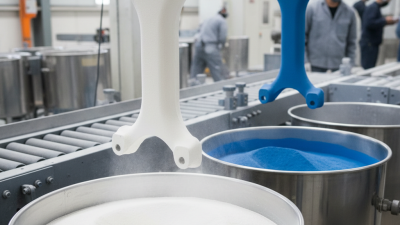
Dip coating needs a clear definition. Fluidized-bed powder dipping can create thicker, durable layers around heated metal parts. Liquid dip systems may deliver thinner films, but their VOC profile depends on the formulation. Powder dipping suits simple shapes and strong edge coverage. Spray powder often offers better control on flat panels. Deep cavities remain challenging.
A practical supplier evaluation should include test panels, cross-hatch adhesion, impact resistance, and measured film thickness. Check results at 50, 75, and 100 μm. Ask how operators control powder recovery, curing temperature, and batch variation. A reliable supplier explains limitations instead of promising universal performance. Do not trust perfect claims. One practical weakness is overlooked pretreatment; poor cleaning can cause early peeling, even with excellent powder. A coating that passes laboratory testing may still fail after outdoor exposure, repeated heating, or sharp-edge handling. That uncomfortable result deserves investigation before large-scale purchasing.
2026 Global Supplier Landscape: Market Growth, Regions, and Production Capacity
The 2026 powder coating supplier landscape is expanding with uneven regional momentum. Grand View Research estimates the global market at about USD 15.9 billion in 2023, with growth near 5.5% annually through 2030. Fortune Business Insights reports a different baseline and projects continued expansion through 2032. Methodologies vary. Buyers should compare definitions before trusting a headline figure.
Asia-Pacific remains the largest production center, supported by construction, appliances, automotive parts, and metal furniture. China and India provide broad manufacturing depth, while Southeast Asia is adding regional capacity. Europe focuses on energy efficiency, low-temperature curing, and stricter environmental performance. North American demand remains tied to infrastructure renewal and industrial equipment. Capacity is not measured consistently worldwide. A supplier may advertise annual tonnage without separating standard colors, specialty formulations, and toll production.
Global buyers should request verified line capacity, monthly utilization, batch size, and lead-time records. A practical audit examines resin systems, pigment dispersion, reclaim handling, and laboratory testing. ISO-certified quality systems can improve reliability, but certification alone proves little about actual delivery performance. MarketsandMarkets also identifies architectural, automotive, and appliance applications as major demand areas. Those segments require different film thickness, impact resistance, and curing windows. Small details matter.
There is a weakness here. Public reports rarely disclose plant-level output. A “top” supplier may have impressive equipment, yet limited spare capacity during peak seasons. On-site audits, sample panels, and three-month delivery data remain more credible than rankings.
Supplier Selection Standards: ISO 9001, 160–200°C Curing, and Film Control
For global buyers, selecting a powder coating dip supplier requires more than comparing price lists. ISO 9001 certification shows that documented quality procedures exist, but buyers should verify its validity and audit scope. Ask for recent batch records, inspection reports, and corrective-action evidence. A reliable supplier can explain how raw materials, color changes, and packing conditions are controlled. Experience matters here.
Curing performance needs careful testing. The stated 160–200°C range should refer to the metal part’s actual temperature, not only the oven display. Request time-temperature curves for different substrate thicknesses. Under-curing may reduce adhesion and chemical resistance. Over-curing can damage color and flexibility. Film control also deserves measurable limits, such as coating thickness, gloss, adhesion, and surface appearance. Orange peel is easy to notice, yet the root cause may be hidden in application settings. The process is not always as stable as a brochure suggests.
Tips: Request test panels from production batches, not laboratory samples. Measure coating thickness at several points, including edges and recessed areas. Confirm whether results follow recognized testing methods. Keep acceptance limits in the purchase agreement. A small sample can reveal defects. However, no checklist is perfect; humidity, transport, and operator technique may still affect the final finish. Suppliers should discuss these risks openly and provide practical handling guidance.
Supplier Selection Reference: Powder Coating Cure Windows
The chart shows typical oven cure-temperature ranges used for common powder-coating chemistries. Buyers should confirm the exact time–temperature schedule in the supplier’s technical data sheet because substrate temperature, coating formulation, and line speed affect final performance.
A practical qualification screen should also include an ISO 9001-certified quality-management system, documented curing capability within the 160–200°C process range, and controlled dry-film thickness. A common industrial reference range for powder-film thickness is approximately 60–120 μm, subject to the product specification and end-use requirements.
Reference framework: ISO 9001 quality management, ASTM D7091 dry-film thickness measurement, and typical cure schedules published in powder-coating technical data sheets.
Buyer Due Diligence: ASTM/ISO Testing, Warranty Terms, and Cost per Kilogram
Global buyers should test powder coating suppliers before comparing headline prices. ASTM D3359 measures adhesion, while ASTM D522 and ASTM D2794 assess flexibility and impact resistance. For exterior systems, ISO 12944-6 helps evaluate corrosion protection through defined laboratory exposure. Ask for complete reports, including substrate, pretreatment, film thickness, curing temperature, and test duration. A certificate without these details is weak evidence.
Warranty language needs equal scrutiny. Require written limits for adhesion loss, gloss retention, color change, corrosion, and film failure. Confirm the warranty period and claim process. Exclusions often include poor pretreatment, incorrect curing, sharp edges, and coastal exposure. ASTM D523 can verify gloss, but gloss alone does not prove durability. It is only one small piece. The U.S. Environmental Protection Agency notes that powder coating systems can achieve transfer efficiency near 95%, yet actual factory results depend on recovery equipment and operator control.
Cost per kilogram should include freight, duty, application loss, recovery efficiency, pretreatment, energy, rework, and disposal. A 2024 market analysis by Grand View Research reported continued global powder-coating growth, but rising demand does not guarantee consistent quality. Compare the landed cost of one usable coated kilogram, not one purchased kilogram. One uncomfortable correction: a cheaper powder may require slower line speeds or more rejects. That mistake can erase the apparent saving. Suppliers should provide batch traceability, technical support, and retained samples for independent verification.