Selecting among the 10 Best Fluid Bed Dryers for Global Buyers requires more than comparing prices or stainless-steel finishes. A suitable fluid bed dryer must match the product, batch size, moisture target, and available utilities. Particle density matters. So does airflow distribution.
Dr. Daizo Kunii, co-author of Fluidization Engineering, described the principle clearly: “A fluidized bed behaves like a boiling liquid when gas passes upward through solid particles.” This behavior supports fast, even heat transfer and controlled drying. However, performance depends on practical details, including inlet-air filtration, temperature stability, exhaust handling, and powder movement. Small design differences can affect yield, cleaning time, and operator safety.
This guide examines dryers for pharmaceuticals, food ingredients, chemicals, and other permitted industrial materials. It considers working capacity, drying uniformity, energy use, automation, cleaning access, and after-sales support. Global buyers should also review electrical standards, documentation, local installation requirements, and validated operating procedures. A machine that performs well in one factory may struggle elsewhere.
The comparison is useful, but it is not absolute. Vendor data can be incomplete. Laboratory results may not predict full-scale behavior. Pilot trials remain valuable, especially for sticky, fragile, or heat-sensitive powders. Details matter. Buyers should request test reports, material certificates, airflow data, and references from comparable applications. The strongest choice is not always the largest or cheapest dryer. It is the system that delivers repeatable results with manageable risk.
Fluid bed dryers use upward air to suspend wet particles, creating close contact between solids and heated gas. This contact improves heat transfer and moisture removal. Airflow must remain stable. Too little velocity leaves material near the screen, causing uneven drying. Too much velocity can carry light particles into the exhaust system.
A working range of 0.5–10 m/s is not a universal setting. Coarse granules may need stronger airflow, while fragile powders often require gentler movement. Particle size, density, shape, and moisture content all affect the fluidization point. In practical trials, operators should increase velocity gradually and watch the bed surface, pressure drop, and outlet moisture. Small changes can matter.
Heat transfer depends on both air temperature and contact time. Higher heat is not always better. Sensitive materials may harden outside while remaining wet inside. I have seen neat calculations fail when feed moisture changed between batches. That is a useful warning. Buyers should request test data using comparable particles, loading levels, and inlet conditions. They should also verify temperature sensors, airflow controls, filtration, and cleaning access. A dryer that looks efficient on paper may perform poorly when the air distribution plate is uneven. Careful testing remains more reliable than a broad specification sheet.
The chart shows how increasing process-air velocity can raise estimated convective heat transfer around fluidized particles. Values are engineering estimates based on air at approximately 25°C and 1 mm spherical particles using a standard particle-to-air heat-transfer correlation. Actual performance depends on particle size, density, moisture content, bed depth, air temperature, and equipment design.
For global buyers, the best fluid bed dryer is not always the largest machine. A 5 kg laboratory unit may reveal airflow problems before a 1,500 kg production system is ordered. Small batches expose problems. Check moisture uniformity, filter loading, product temperature, and discharge time during trials. These measurements provide stronger evidence than a brochure’s rated capacity.
Capacity should match the real batch range, not only the maximum figure. A 150 kg dryer running at 20 kg may show poor fluidization and uneven drying. Ask for test data using materials with similar density, particle size, and moisture.
Record inlet air temperature, outlet temperature, airflow, and energy use. Energy demand can change sharply when exhaust air carries excessive moisture. Heat recovery may help, but its maintenance burden needs honest evaluation.
Scale-up is not linear. Air distribution, bed depth, filter area, and vibration can behave differently after enlargement. Experienced engineers should compare pilot results with production calculations and confirm cleaning access.
I would also inspect controls, spare-part availability, operator training, and local service response. These details often decide uptime. One weakness remains common: buyers may trust a single successful trial too quickly. Repeat testing across different loads before approving a 5–1,500 kg range.
Fluid bed dryers are judged by more than drying speed. In pilot work, I watch airflow, bed movement, exhaust temperature, and final moisture variation. Top-spray systems wet particles from above while heated air lifts the bed. They suit granulation, coating, and routine powder drying. A 500-kilogram batch may still hide wet pockets near the filter area. Sampling matters.
Bottom-spray designs introduce liquid from below through a distributor or spray plate. This arrangement can improve contact between droplets and fluidized particles. It often supports coating, especially when uniform layering is important. However, nozzle access, cleaning time, and pressure stability deserve close inspection.
Wurster systems use a partitioned column to circulate particles through a focused spray zone. They are precise for pellet or multiparticulate coating. Operators must control inlet air, spray rate, and atomization pressure together. Small changes can create agglomerates or uneven films. That lesson is easy to underestimate.
When comparing ten models, I would request tested moisture maps, cleaning records, scale-up data, and energy readings. A polished brochure cannot replace those records. Also compare filter design, safety controls, material compatibility, automation, and local service capability. The best choice depends on product behavior, not simply the largest airflow or lowest quoted price. Some specifications remain unclear until trials begin.
10 Best Fluid Bed Dryers for Global Buyers?
For global buyers, compliance must shape the dryer specification from day one. GMP expectations include hygienic materials, smooth welds, cleanable chambers, and controlled product contact surfaces. Ask for documented cleaning validation, temperature mapping, and batch traceability. Inspect the discharge area closely; powder often hides in small gaps.
FDA 21 CFR Part 11 applies when electronic records or signatures support regulated activities. The control system should provide unique user access, audit trails, secure timestamps, and controlled data changes. Validation documents should explain how alarms, recipes, and reports remain accurate. A screen showing data is not enough. Data integrity matters more.
ATEX assessment should match the dust hazard, zone classification, and equipment category. Confirm grounding, bonding, pressure protection, and suitable electrical components. IECEx certification can support international procurement, but it does not replace local approval requirements. Request certificates, test reports, and clear scope statements. No checklist is perfect. A missed humidity sensor or poorly defined cleaning step can create trouble later. I would also verify service records, operator training, and software backup procedures before comparing ten dryers. The cheapest compliant-looking option may still demand expensive corrective work.
| Rank | Dryer Configuration | Typical Batch Capacity | Typical Inlet Temperature | Typical Airflow Range | Best-Suited Applications | GMP Design Checklist | FDA 21 CFR Part 11 Readiness | ATEX Requirement | IECEx Consideration | Key Qualification Evidence |
|---|---|---|---|---|---|---|---|---|---|---|
| 1 | Laboratory Fluid Bed Dryer | 0.1–5 kg | 30–120 °C | 50–500 m³/h | Formulation screening, process development, small-scale pharmaceutical trials, and R&D work. | 316L product-contact parts, sanitary welds, cleanable chamber, validated temperature probes, and documented surface finish. | Use role-based access, audit trails, electronic signatures, time synchronization, backup, and controlled user administration if electronic GMP records are generated. | Required when combustible dust or vapor can create an explosive atmosphere. Conduct dust hazard and zoning assessments before specification. | IECEx-certified components may be needed for hazardous locations outside the European Union; certification must match the zone and gas or dust group. | URS, design review, calibration certificates, installation qualification, operational qualification, airflow mapping, and repeatability studies. |
| 2 | Top-Spray Granulation and Drying Unit | 5–150 kg | 40–100 °C | 500–8,000 m³/h | Wet granulation, binder spraying, tablet intermediates, and controlled particle-size development. | Validated spray rate, hygienic product path, minimized dead legs, CIP or documented manual cleaning, and controlled nozzle access. | Electronic batch recipes and process parameters should include audit-trail review, authorized changes, secure signatures, and data-retention controls. | Assess ignition sources from atomization, electrostatic charge, heated air, and dust accumulation; specify containment or explosion protection where required. | Select appropriately certified sensors, motors, valves, and control equipment when installed in an IECEx-recognized hazardous area. | Granule moisture uniformity, spray-rate verification, endpoint accuracy, filter-integrity checks, and cleaning-validation records. |
| 3 | Bottom-Spray Coating and Drying Unit | 5–200 kg | 35–85 °C | 500–10,000 m³/h | Pellet coating, taste masking, enteric coating, modified-release systems, and multiparticulate products. | Uniform spray distribution, product-contact traceability, hygienic seals, validated cleaning, and controlled coating-air conditions. | Record recipe versions, operator actions, alarms, critical coating parameters, and electronic approvals in a controlled system. | Solvent-based coatings may require vapor classification, gas detection, ventilation, inerting, and certified electrical equipment. | IECEx equipment selection is installation-specific and does not replace local electrical, fire, or process-safety regulations. | Coating uniformity testing, spray-pattern qualification, temperature distribution, exhaust monitoring, and solvent-recovery verification when applicable. |
| 4 | Vibrating Fluid Bed Dryer | 20–1,000 kg/h | 40–160 °C | 1,000–25,000 m³/h | Continuous drying of granules, crystals, food ingredients, fertilizers, and heat-tolerant powders. | Accessible product zones, hygienic conveyor design, controlled vibration, drainability, and protection against cross-contamination. | Historian data should be attributable, legible, contemporaneous, original, accurate, complete, consistent, enduring, and available. | Combustible powder assessment should include dust concentration, minimum ignition energy, pressure development, and explosion-venting strategy. | Confirm vibration-rated and appropriately certified electrical components for the selected hazardous-area classification. | Residence-time distribution, belt or tray loading, final-moisture capability, airflow balance, vibration verification, and product-temperature studies. |
| 5 | Continuous Fluid Bed Dryer and Cooler | 100–5,000 kg/h | 40–180 °C | 5,000–100,000 m³/h | High-throughput powders, granules, food products, chemicals, and continuous production lines. | Validated residence time, hygienic transfer points, cleanable air-handling system, and segregation between product campaigns. | Integrate batch or lot tracking with controlled recipes, alarm history, audit trails, user permissions, and secure data export. | ATEX zoning and conformity assessment depend on dust properties, process layout, pressure relief, isolation, and the equipment category selected. | IECEx certification is relevant where hazardous-area equipment is required under the destination country’s regulatory framework. | Continuous process capability, moisture-control limits, airflow uniformity, start-up and shutdown studies, and line-clearance verification. |
| 6 | Closed-Loop Fluid Bed Dryer | 10–500 kg | 30–120 °C | 500–20,000 m³/h | Potent, oxygen-sensitive, solvent-containing, or contamination-sensitive pharmaceutical and chemical products. | Contained charging and discharge, pressure control, high-integrity filtration, validated decontamination, and controlled material transfer. | Electronic records should capture oxygen level, pressure, temperature, solvent concentration, alarms, and authorized intervention history. | May require inert-gas control, oxygen monitoring, solvent-vapor management, explosion suppression or venting, and certified instrumentation. | Specify certified instruments and protective systems according to the actual gas or dust hazardous-area classification. | Leak testing, oxygen-control performance, pressure-hold testing, containment verification, filter testing, and solvent-removal studies. |
| 7 | High-Shear Fluid Bed Dryer | 20–800 kg | 40–130 °C | 1,000–30,000 m³/h | Rapid drying of cohesive granules, high-density agglomerates, and products requiring strong fluidization. | Validated impeller or agitation controls, smooth product-contact surfaces, cleanability, and prevention of particle attrition. | Control recipe access, parameter limits, alarm acknowledgment, data review, and electronic approval of deviations and batch release. | Evaluate mechanical sparks, hot surfaces, electrostatic discharge, and combustible-dust accumulation in addition to process dust hazards. | Certified motors, switches, temperature devices, and protective circuits may be necessary in classified areas. | Mixing uniformity, torque or load monitoring, drying endpoint, particle-size distribution, and mechanical safety verification. |
| 8 | Vacuum Fluid Bed Dryer | 5–300 kg | 20–90 °C | 200–10,000 m³/h | Low-temperature drying of heat-sensitive, oxygen-sensitive, or solvent-bearing products. | Vacuum-rated sanitary chamber, validated seals, condensate management, cleanable filters, and controlled discharge. | Record vacuum level, shelf or inlet temperature, product temperature, endpoint, alarms, and authorized recipe changes. | Assess flammable vapor release, vacuum integrity, oxygen ingress, static charge, and suitable explosion-protection measures. | IECEx-certified vacuum sensors, valves, motors, and electrical assemblies may be required for classified installations. | Vacuum leak rate, condenser performance, drying-curve reproducibility, residual-solvent testing, and pressure-boundary inspection. |
| 9 | Explosion-Protected Fluid Bed Dryer | 10–1,000 kg | 30–150 °C | 500–40,000 m³/h | Combustible powders, dust-forming pharmaceutical intermediates, food ingredients, and chemical materials. | Sanitary containment, validated dust-tight seals, safe filter access, controlled discharge, and documented cleaning procedures. | Safety-system events, interlocks, trips, alarms, bypass controls, and maintenance overrides require secure records and auditability. | Use a documented explosion-risk assessment covering zoning, pressure relief, explosion isolation, suppression, grounding, and ignition-source control. | IECEx certification can support international equipment selection, but the complete installation still requires local approval and verification. | Dust explosibility data, pressure-relief testing, interlock challenge tests, grounding continuity, filter integrity, and emergency-shutdown validation. |
| 10 | Aseptic or Contained Fluid Bed Dryer | 5–500 kg | 30–100 °C | 500–25,000 m³/h | Sterile or highly sensitive pharmaceutical materials, potent compounds, and products requiring controlled exposure. | HEPA-filtered air, pressure cascade, validated sterilization or sanitization, closed transfer, 316L contact surfaces, and environmental monitoring. | Electronic batch records must support attributable actions, secure signatures, audit trails, validated access controls, and long-term retrieval. | If combustible powders or solvents are present, combine aseptic controls with a documented explosion-protection strategy. | Use IECEx-certified components where required by the installation classification; sterile design does not itself establish hazardous-area compliance. | HEPA integrity, airflow visualization, pressure-cascade testing, sterilization-cycle validation, environmental monitoring, and containment verification. |
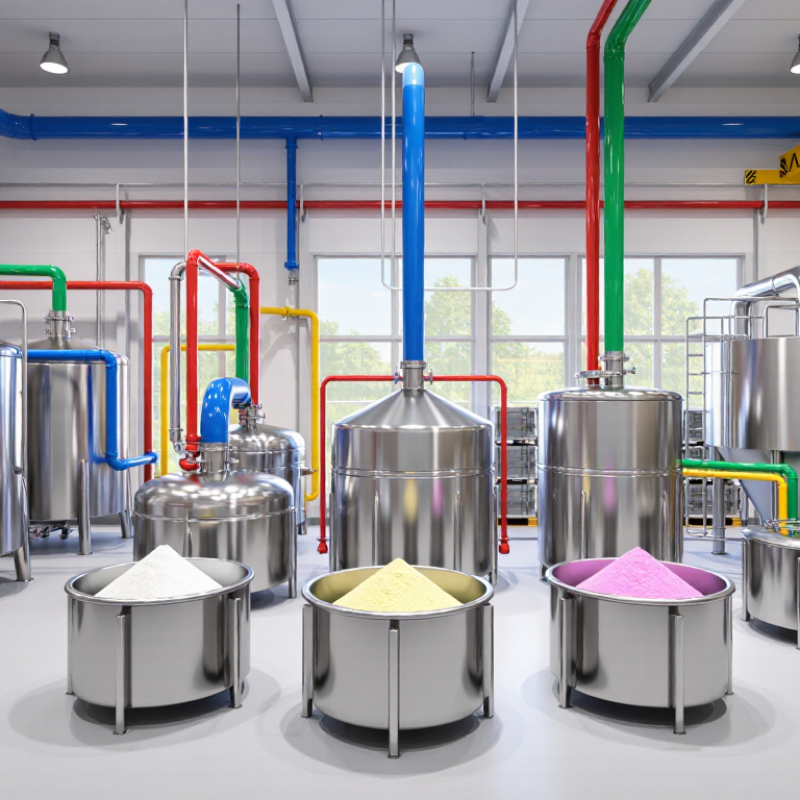
For global buyers, the best fluid bed dryer depends on the product, not the catalogue. A practical ten-choice shortlist includes batch, continuous, vibrating, top-spray, bottom-spray, tangential-spray, vacuum, inert-loop, containment, and pilot-scale designs. The usable drying window may range from 20°C to 200°C. However, inlet temperature is not product temperature. Wet granules can remain much cooler during evaporation.
Pharmaceutical plants often choose top-spray systems for granulation and bottom-spray systems for coating. Tight control of airflow, humidity, and filter pressure protects content uniformity. ICH Q8(R2) recommends linking critical quality attributes with a defined design space. That supports controlled trials instead of guesswork. Food processors may prefer vibrating or continuous beds for sliced vegetables, grains, and protein powders. The European Commission’s Food, Drink and Milk BREF identifies energy efficiency as a key operating concern. Cleanability still matters more than impressive airflow.
Chemical producers often need vacuum or closed-loop inert drying for solvents and heat-sensitive powders. At 20–60°C, dehumidified air can reduce thermal stress, but drying may become painfully slow. At 120–200°C, throughput improves, yet scorching and agglomeration risks rise. The U.S. Department of Energy reports that process heating represents about 51% of manufacturing energy use. That figure makes heat recovery worth measuring. I would not trust a temperature setting alone. Test moisture gradients, exhaust humidity, dust loading, and cleaning time with real batches. Small errors appear later. Often, expensively.