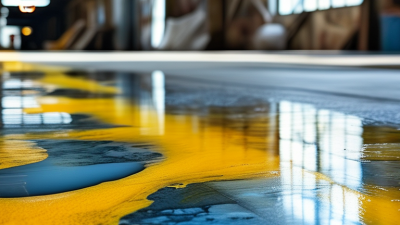
Choosing the best epoxy paint begins with the surface, not the color chart. A garage floor, factory walkway, and basement wall face different stresses. Oil stains, trapped moisture, tire heat, and daily abrasion can quickly expose a weak coating system. A glossy finish may look impressive, yet appearance alone proves little.
Coatings expert Dr. Mark D. Soucek puts the principle simply: “A coating performs only as well as the surface beneath it.” This advice matters when comparing epoxy paint products. Preparation may require degreasing, mechanical abrasion, crack repair, and moisture testing. Skipping one step can create peeling, bubbling, or uneven curing. I have found that many project failures begin with rushed preparation, not poor product chemistry.
The right choice also depends on resin type, solids content, pot life, chemical resistance, and expected traffic. Two-part epoxy paint usually offers stronger adhesion than basic floor paint, but it demands accurate mixing. Temperature and humidity matter too. A cold slab can delay curing. Excess moisture can damage the bond.
There is no universal “best” epoxy paint. That answer sounds convenient, but it is incomplete. A homeowner may value easy application, while a workshop needs resistance against solvents and dropped tools. This guide examines those differences carefully. It will help readers compare technical claims, identify realistic performance needs, and avoid choosing by price alone. Even experienced users can misjudge a surface. That is why testing a small area first remains a sensible step.
How to Choose the Best Epoxy Paint?
What Is Epoxy Paint and How Does It Work?
Epoxy paint is a two-part coating made from resin and a curing agent. When mixed, they react and form a dense polymer network. It does not simply dry like ordinary paint. It cures through chemical cross-linking. This creates a hard surface that can resist abrasion, oils, moisture, and repeated cleaning. The reaction also explains its weakness: incorrect mixing can leave soft, sticky, or uneven areas.
The global epoxy resin market was valued at about $10.8 billion in 2021, according to Allied Market Research. That growth reflects demand from flooring, industrial maintenance, and protective coatings. Yet market growth does not guarantee a suitable product. A practical choice depends on substrate condition, expected traffic, chemical exposure, and curing temperature. Concrete must be clean, mechanically sound, and sufficiently dry. ASTM F2170 testing can measure internal concrete humidity before installation. Skipping this step is a common mistake.
Look closely at the technical data sheet. Check volume solids, pot life, recoat time, chemical resistance, and coverage. ASTM D4060 evaluates abrasion resistance, while ASTM D4541 measures coating adhesion. Higher solids usually mean less shrinkage and stronger film build, but application becomes less forgiving. I have seen coatings fail because the floor looked dry, not because it was ready. A small test area can reveal poor adhesion, bubbles, or an inaccurate color match before the full project begins. Sometimes, the “best” epoxy is simply the one suited to the surface.

Epoxy paint is a two-part coating made by mixing resin with a hardener. The chemical reaction creates a tough, adhesive, and chemically resistant surface. The chart shows common curing-time ranges for epoxy floor coatings; actual times vary with temperature, humidity, film thickness, and product formulation.
Choosing epoxy paint starts with the surface, not the color. Concrete, steel, wood, and tile require different preparation. Concrete needs moisture testing before coating. ASTM F2170 recommends in-situ relative humidity testing because trapped moisture can cause blistering. ACI 308R-16 also treats 28 days as a common concrete curing reference, but curing time does not guarantee dryness.
Assess the project’s real punishment. A garage may face hot tires, oil, salts, and abrasion. A workshop may need chemical resistance and heavier impact protection. A damp basement demands vapor control and careful ventilation. Steel requires rust removal and a suitable profile. Wood moves with humidity, so rigid epoxy can crack. The 2024 Global Epoxy Coatings Market report by Grand View Research identifies industrial flooring and protective applications as major demand areas. That trend reflects performance needs, not a reason to over-specify.
Tips: Test a small area first. Check moisture, adhesion, temperature, and cleaning methods. Read the technical data sheet carefully. Match service temperature and chemical exposure. Thin applications may look acceptable initially, then fail at edges. I have found that “stronger” is not always better; the wrong hardness can make repairs harder. Recheck assumptions before ordering.
How to Choose the Best Epoxy Paint?
Comparing epoxy paint begins with the formula, not the color. Two-part systems combine resin and hardener, creating a denser film after mixing. One-part products are easier to apply, but they may rely more on moisture or air curing. That difference matters on a busy garage floor. A two-part coating usually offers stronger chemical and abrasion resistance, yet poor mixing can leave soft patches. I have seen this happen near door edges.
Waterborne epoxy formulas generally produce lower odor and easier cleanup. Solventborne versions often flow better and tolerate difficult surfaces. High-solids formulas leave more coating behind after application. Check the technical data sheet for volume solids, recommended thickness, pot life, and recoat time. These details matter more than claims such as “industrial strength.” The U.S. Environmental Protection Agency identifies VOC emissions as an important coating-related concern, so ventilation and local requirements still deserve attention.
Market evidence also helps explain the variety. Grand View Research valued the global epoxy resin market at about 11.9 billion dollars in 2022 and projected approximately 7.3% annual growth through 2030. More demand does not automatically mean better performance. Compare independent test results, especially ASTM D4541 pull-off adhesion data and abrasion testing. Surface preparation remains decisive. Remove oil, repair cracks, and confirm concrete dryness before coating. I would still test a small hidden area first. Product literature can sound precise, but real floors are rarely perfect.
When choosing epoxy paint, treat performance claims as testable details, not decoration. I check adhesion first, especially on concrete floors exposed to tires, tools, or frequent washing. Ask whether the product suits your surface, because epoxy designed for metal may behave differently on porous concrete. A clean, mechanically prepared surface matters as much as the coating itself. I once underestimated floor moisture, and the finish later developed small blisters. That mistake changed how I evaluate technical data.
Abrasion resistance Abrasion resistance is essential for garages, workshops, and busy storage areas. Look for clear test results rather than vague phrases like “industrial strength.”
Chemical resistance Chemical resistance also deserves attention. Oils, detergents, salts, and mild solvents can attack weak coatings. Check the stated resistance period and operating temperature. Gloss can hide poor durability. It looks impressive.
Moisture tolerance, curing time, and recoat windows Moisture tolerance, curing time, and recoat windows affect real installation results. A coating may require several dry days before heavy traffic, even when it feels dry within hours. Check application temperature, humidity limits, and recommended film thickness. Excessive thickness can create uneven curing or trapped bubbles. Slip resistance is another practical feature, particularly near entrances or washing areas. Request the technical data sheet and safety information before buying. I also prefer products with independently verified test methods, although test conditions rarely match every real floor. Careful preparation remains unavoidable.
How to Choose the Best Epoxy Paint?
Choosing epoxy paint begins with the surface, not the color. Match the coating to concrete, steel, wood, or another substrate. Check chemical exposure, traffic level, temperature, UV exposure, and expected slip resistance. A 2024 Grand View Research report estimated the global epoxy resin market at about US$12.7 billion in 2023. That growth reflects wide industrial use, but popular does not mean suitable. Review the technical data sheet carefully. Compare solids content, working time, cure time, and recommended film thickness.
Preparation decides more failures than application technique. Remove grease, curing compounds, dust, and weak concrete. Mechanical grinding usually creates a stronger profile than light acid cleaning. I still see teams rush this step. Test it twice. ASTM F2170 recommends in-situ humidity testing, with probes commonly placed at 40% slab depth when drying occurs from one side. Follow the coating’s stated moisture limit. A dry-looking floor may still trap vapor. That mistake becomes blistering later.
Apply only within the stated temperature and humidity range. Measure both components accurately, then mix slowly with a clean paddle. Respect the pot life; thick material can harden inside the bucket. Back-roll evenly and maintain a wet edge. For grinding work, OSHA’s respirable crystalline silica limit is 50 micrograms per cubic meter over eight hours. Use suitable dust control and respiratory protection. My practical caution is simple: a small test area can reveal poor adhesion, unexpected color, or a spreading error before the whole floor is committed.
| Epoxy Paint Type | Suitable Surfaces and Uses | Typical Performance | Surface Preparation | Mixing and Working Time | Application Guidance | Key Limitations |
|---|---|---|---|---|---|---|
| Water-Based Two-Part Epoxy | Interior concrete floors, utility rooms, workshops, and areas where lower odor is important. | Lower odor and easier cleanup than solvent-based systems; generally offers moderate chemical and abrasion resistance after full cure. | Remove oil, grease, dust, laitance, and weak concrete. Mechanically abrade or chemically etch where permitted, then allow the surface to dry completely. | Mix the resin and hardener in the specified ratio. Typical working time is about 30–60 minutes, depending on temperature and product formulation. | Apply in thin, even coats with a roller, brush, or suitable squeegee. Avoid application when condensation may form. | Usually less tolerant of standing water, heavy traffic, and aggressive chemicals than high-solids systems. |
| Solvent-Based Two-Part Epoxy | Concrete floors, metal structures, machinery areas, and commercial maintenance applications with adequate ventilation. | Good penetration and leveling; typically provides moderate-to-high resistance to abrasion, moisture, and many chemicals. | Clean and mechanically profile the surface. Remove rust from steel and use a compatible corrosion-resistant primer when required. | Observe the stated induction period, mixing ratio, and pot life. Many formulations provide approximately 20–60 minutes of working time. | Use only with suitable ventilation and approved application equipment. Keep away from ignition sources and follow the safety data sheet. | Higher odor and volatile organic compound emissions than water-based or 100% solids products; local regulations may restrict use. |
| High-Solids Epoxy | Industrial floors, warehouses, garages, workshops, and areas exposed to frequent foot or vehicle traffic. | Builds a thicker film with good abrasion resistance, adhesion, and chemical resistance when correctly applied and fully cured. | Shot-blast, grind, or otherwise profile concrete to remove contaminants and weak surface material. Repair cracks and fill voids before coating. | Mix thoroughly without whipping in air. The usable working time often decreases significantly as material temperature and batch size increase. | Apply at the specified wet-film thickness using a roller or squeegee. Back-roll wet edges and use a spiked roller only when required by the system. | More demanding application conditions; poor preparation or incorrect thickness can cause pinholes, blisters, or adhesion failure. |
| 100% Solids Epoxy | Heavy-duty concrete floors, loading zones, industrial plants, and areas requiring a thick protective film. | Very high film build with little or no solvent evaporation; generally offers strong abrasion and chemical resistance when installed as a complete system. | Concrete must be clean, dry, sound, and mechanically profiled. Moisture testing is recommended before installation over slabs. | Use precise component ratios and mix only manageable batches. Typical pot life may range from about 15–45 minutes, depending on formulation and temperature. | Apply at the specified thickness with a notched squeegee, roller, or gauge rake. Maintain a wet edge and respect the recoat window. | Usually more expensive and less forgiving of substrate moisture, low temperatures, poor mixing, and application delays. |
| Epoxy Primer with Epoxy Topcoat | Concrete or steel systems needing improved adhesion, substrate sealing, corrosion control, or a defined decorative finish. | A primer can improve adhesion and seal porous surfaces; the topcoat provides the required appearance and final resistance. | Remove contamination and create the required surface profile. Abrade glossy cured primer before recoating if the recoat window has been exceeded. | Each component and coat has its own mix ratio, pot life, and recoat window. Do not combine products unless system compatibility is confirmed. | Apply the primer first, allow it to become suitably cured, then apply the topcoat within the stated interval and thickness limits. | Requires more labor and scheduling control; incompatible layers or missed recoat windows can reduce adhesion. |