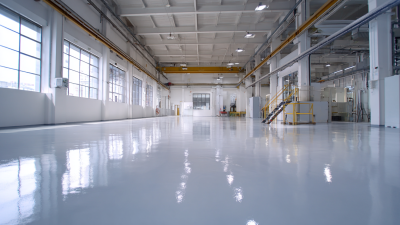
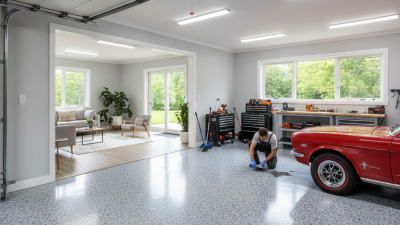
Global demand for durable industrial coatings is rising as infrastructure, machinery, warehouses, and marine assets require longer service lives. Grand View Research has identified epoxy resins as a major growth segment, supported by construction, electronics, and transportation applications. Fortune Business Insights also projects steady expansion in the global epoxy resin market through 2032. These findings do not measure every epoxy paint sale, but they reveal the material’s expanding industrial importance.
China has become a significant manufacturing base for epoxy paint, offering broad production capacity, private-label flexibility, and competitive export logistics. The China National Coatings Industry Association has repeatedly highlighted coatings modernization, quality improvement, and environmental upgrades across the domestic sector. For global buyers, the factory name alone is not enough. Resin chemistry, pigment dispersion, film thickness, curing behavior, and batch traceability can change the final result.
This guide introduces China’s top 10 epoxy paint manufacturers for international buyers. The selection considers product range, manufacturing experience, export capability, technical documentation, certifications, and application support. ASTM and ISO test references can help, but certificates should be checked against the actual product and batch. Ask for recent test reports. Confirm surface preparation requirements. Request a physical sample before placing a large order.
Rankings are never completely objective. Public data can be incomplete, and supplier claims may vary by market. That is worth remembering. A lower quotation may hide higher preparation costs, slower technical support, or inconsistent color matching. The strongest supplier is not always the largest one; it is the one that delivers stable epoxy paint performance under your real operating conditions.
Epoxy paint is a two-component coating made from resin and a curing agent. When mixed, they form a hard, chemical-resistant film that bonds to concrete, metal, and selected industrial surfaces. It is commonly used on factory floors, warehouses, workshops, and equipment areas. A finished floor may show a smooth gloss, clear color, and resistance to oil marks, abrasion, and frequent cleaning.
Global buyers need reliable epoxy paint manufacturers because coating performance depends on more than the product label. Consistent resin quality, accurate mixing ratios, and stable curing behavior reduce application risks. A dependable manufacturer should provide technical data sheets, safety information, batch records, and clear surface-preparation guidance. They should also support testing for adhesion, hardness, drying time, and chemical resistance. In real projects, small issues matter. Concrete moisture, poor grinding, or an incorrect mixing ratio can cause bubbles and peeling. Even a high-quality coating may fail when preparation is overlooked.
Tips: Ask for a sample and test it on the actual substrate. Check color, pot life, curing time, and surface adhesion under local conditions. Request recent quality documents, not only promotional claims. Confirm packaging details and storage requirements before shipment. I would also question unusually low prices. They may reflect thinner coverage, weaker components, or limited technical support. Some specifications look impressive on paper, yet practical results can still differ. A controlled trial remains the safer decision.

Selecting China’s top epoxy paint manufacturers requires more than checking online rankings. I compared production experience, technical capacity, export records, and customer feedback. Factory visits or verified audit reports can reveal details that websites often hide. Clean mixing rooms, labeled raw materials, and controlled storage indicate stronger process discipline.
I also reviewed product data sheets, safety documents, curing times, adhesion results, and chemical resistance reports. Reliable manufacturers should explain testing methods, batch traceability, and quality controls clearly.
Sample orders were important because laboratory results may not reflect real application conditions. Coating thickness, humidity, surface preparation, and temperature can change performance. No ranking is flawless. A company may excel in industrial flooring but perform poorly in another application. This limitation deserves attention.
Tips: Request recent samples, test them on your actual substrate, and record every result. Ask for batch numbers and independent test evidence. Check whether technical support responds with practical guidance, not vague promises. Also compare lead times, packaging quality, customization ability, and after-sales communication. A low price can become expensive when coatings arrive damaged or application problems remain unresolved. Look for consistent evidence across documents, samples, audits, and customer references.
China’s leading epoxy paint manufacturers serve different industrial needs rather than offering identical products. Some focus on floor coatings for warehouses, workshops, and parking areas. Their strengths include strong adhesion, abrasion resistance, and consistent color matching. Others specialize in protective coatings for steel structures, pipelines, and machinery. These factories often provide high-build formulas that help reduce application time. Sample panels reveal more than brochures.
Several manufacturers emphasize waterborne epoxy systems for enclosed spaces. They develop low-odor coatings for hospitals, schools, and food-processing facilities. Their technical teams usually adjust curing speed, gloss, and viscosity for local climate conditions. Coastal suppliers may have stronger experience with humid storage and container shipping. Inland factories sometimes compete through flexible batch sizes and faster customization. This difference matters to distributors with changing inventories.
Quality-focused producers commonly operate testing laboratories for adhesion, hardness, impact resistance, and chemical exposure. Some maintain documented inspection procedures from raw material intake to final packaging. Buyers should request recent test records, safety data sheets, and production samples. A factory audit can reveal details that online profiles miss, such as poor ventilation or inconsistent labeling. No manufacturer is perfect. Even a reliable supplier may struggle with color variation between batches or delayed technical replies. Careful buyers compare these weaknesses openly, confirm trial results, and define acceptance standards before placing larger orders.
| Profile | Primary Product Focus | Typical End-Use Applications | Key Technical Strengths | Common Coating System | Typical Film Build | Quality and Compliance Focus | Best Fit for Global Buyers |
|---|---|---|---|---|---|---|---|
| Profile 01 | Solvent-free epoxy floor coatings Self-leveling and high-build systems |
Warehouses, logistics centers, electronics facilities, workshops and commercial interiors | Low-VOC formulation potential, smooth appearance, good chemical resistance and easy-to-clean surfaces | Epoxy primer + epoxy mortar or self-leveling layer + protective topcoat | Approximately 1–3 mm for complete floor systems, depending on specification | Batch traceability, viscosity control, color consistency, abrasion and adhesion testing | Projects requiring seamless, hygienic and durable indoor flooring with controlled appearance |
| Profile 02 | Waterborne epoxy coatings Low-odor interior systems |
Schools, hospitals, offices, residential garages and occupied buildings | Lower odor than many solventborne systems, easier indoor application and compatibility with concrete substrates | Waterborne epoxy primer + waterborne epoxy finish coat | Approximately 0.2–0.8 mm for thin-film applications | Pot-life evaluation, drying-time control, adhesion testing and VOC documentation | Buyers prioritizing indoor air considerations, simplified application and low odor |
| Profile 03 | Industrial epoxy primers Anti-corrosion preparation coats |
Steel structures, machinery, pipelines, storage tanks and fabrication components | Strong substrate adhesion, barrier protection and compatibility with polyurethane or epoxy topcoats | Surface preparation + epoxy primer + compatible intermediate and finish coats | Approximately 50–150 μm dry film thickness per coat, subject to the system design | Dry-film thickness, salt-spray evaluation where required, adhesion and recoat-window control | Industrial coating packages requiring reliable corrosion-control foundations |
| Profile 04 | Epoxy zinc-rich primers Heavy-duty steel protection |
Bridges, structural steel, port equipment, energy infrastructure and heavy machinery | High zinc loading, cathodic protection capability and suitability for demanding atmospheric environments | Abrasive blast cleaning + zinc-rich epoxy primer + epoxy intermediate coat + finish coat | Typically about 40–100 μm for the primer layer, according to the technical specification | Zinc content verification, dry-film thickness, adhesion and compatibility with the full coating system | Infrastructure and fabricated-steel projects with documented surface-preparation requirements |
| Profile 05 | Heavy-duty epoxy mortar systems Repair and build-up materials |
Loading docks, ramps, production floors, parking areas and damaged concrete surfaces | High build, impact resistance, localized repair capability and improved tolerance for uneven substrates | Epoxy primer + resin-and-aggregate mortar + broadcast aggregate + seal coat | Approximately 3–10 mm or more for heavy-duty build-up systems | Aggregate grading, compressive strength, bond strength, abrasion and chemical-resistance checks | High-traffic areas where standard thin-film floor paint is insufficient |
| Profile 06 | Anti-static and conductive epoxy flooring Specialty floor systems |
Electronics plants, laboratories, clean manufacturing areas and controlled industrial rooms | Designed for electrostatic-control requirements, seamless installation and resistance to routine chemical exposure | Conductive primer or grid + dissipative epoxy layer + compatible finish coat | Usually about 1–3 mm for a complete system, depending on electrical requirements | Resistance measurement, continuity checks, grounding design and surface-uniformity control | Facilities requiring documented electrostatic-control performance rather than decorative flooring alone |
| Profile 07 | Decorative epoxy flooring Flake, quartz and metallic-effect finishes |
Retail spaces, showrooms, restaurants, offices, garages and public interiors | Wide color selection, decorative texture options, seamless appearance and straightforward maintenance | Colored epoxy base + decorative aggregate or flakes + clear protective topcoat | Approximately 0.5–2 mm for decorative systems | Color tolerance, gloss or slip-resistance checks, intercoat adhesion and packaging consistency | Projects balancing visual design, cleanability and moderate mechanical performance |
| Profile 08 | Chemical-resistant epoxy coatings Protective linings and floor finishes |
Chemical rooms, laboratories, wastewater areas, workshops and industrial processing zones | Resistance to selected acids, alkalis, oils, solvents or salts when matched to the exposure conditions | Epoxy primer + high-build epoxy lining + chemically compatible topcoat where necessary | Approximately 0.5–2 mm for linings; thicker systems may be specified for severe exposure | Immersion or spot-resistance testing based on the chemical list, adhesion and pinhole inspection | Buyers able to provide a defined chemical-exposure schedule before product selection |
| Profile 09 | Epoxy coatings for concrete protection Moisture-tolerant and fast-maintenance systems |
Basements, utility rooms, food-processing support areas, parking structures and concrete equipment bases | Concrete adhesion, reduced dusting, improved stain resistance and options for damp-substrate applications | Concrete preparation + moisture-tolerant epoxy primer + epoxy finish or sealer | Approximately 0.3–1.5 mm for common protective applications | Substrate moisture assessment, pull-off adhesion, curing behavior and slip-resistance verification | Maintenance projects where concrete condition and installation downtime are critical factors |
| Profile 10 | Private-label and project-formulated epoxy coatings OEM-oriented supply programs |
International distributors, construction-material importers, engineering contractors and regional flooring brands | Formula adjustment, custom colors, private packaging, technical documentation and container-load coordination | Primer, intermediate and topcoat packages tailored to the buyer’s application and climate | Specified by project; commonly ranges from thin-film systems to multi-millimeter flooring assemblies | Technical data sheets, safety data sheets, batch samples, inspection records and export packaging controls | Global buyers needing customized specifications, private labeling or repeat container-volume supply |
For global buyers, comparing the top ten epoxy paint manufacturers requires more than checking price. MarketsandMarkets estimates the global epoxy resin market will grow from about USD 12.1 billion in 2023 to USD 17.5 billion by 2028. This growth increases supplier choices, but also increases quality risks. Compare solvent-free, waterborne, high-build, zinc-rich, and anti-static systems by dry-film thickness, coverage, curing time, and substrate compatibility. Ask for recent batch records, not only attractive brochures.
Certifications provide useful evidence. ISO 9001 supports consistent quality procedures, while ISO 14001 and ISO 45001 indicate environmental and safety management systems. However, a certificate alone is not proof. Request its verification number and scope. For European shipments, review REACH and relevant VOC documentation. For each coating, obtain a technical data sheet, safety data sheet, certificate of analysis, and test results based on recognized ASTM or ISO methods. Check abrasion, adhesion, chemical resistance, and salt-spray performance under comparable conditions.
Export capability is equally practical. Strong manufacturers can provide clear HS-code guidance, UN-compliant packaging where required, multilingual labels, pallet photographs, and stable container-loading plans. Confirm minimum order quantities, sample lead times, production capacity, and port options in writing. A 20-liter test kit should arrive sealed, with batch numbers visible. I would still inspect a trial application locally; published performance can change with humidity, surface preparation, or applicator skill. This small step is often missed. Data from the World Bank’s Logistics Performance Index also reminds buyers that delivery reliability depends on the wider supply chain, not the factory alone.
Key product, certification, and export-capability dimensions for supplier comparison
The chart uses a practical buyer-priority index from 1 to 5. Product performance, quality certifications, technical documentation, regulatory compliance, customization capability, and export support are commonly reviewed when evaluating Chinese epoxy paint suppliers. Always verify current certificates, test reports, safety data sheets, technical data sheets, and destination-market compliance directly with each manufacturer.
Choosing among China’s top epoxy paint manufacturers requires more than comparing price lists. Global buyers should examine formulation control, export experience, and documented performance. Grand View Research estimates the global epoxy resin market will continue growing at more than 7% annually through 2030. This growth increases supplier choices, but also increases quality differences.
Request recent technical data sheets, safety documentation, and batch traceability records. Ask for coating tests using ASTM D3359 adhesion, ASTM D4060 abrasion, and ISO 12944 corrosion exposure methods. A reliable supplier should explain test conditions, film thickness, curing time, and substrate preparation clearly. Vague laboratory claims are warning signs. Small details matter, such as whether the sample was tested after seven days or only after overnight curing.
Production audits can reveal more than polished brochures. Check mixing equipment, temperature controls, pigment storage, and retained-sample procedures. Confirm whether the supplier can reproduce the same color and viscosity across several batches. MarketsandMarkets identifies construction, industrial equipment, and transportation as major epoxy-coating applications, each requiring different performance priorities. Therefore, one universal formula rarely fits every project. I would also compare three trial batches, not one. That costs more time, yet one successful sample may hide inconsistent production. A lower quotation may become expensive after repainting, delayed installation, or rejected cargo. Supplier selection should remain evidence-based, but practical judgment still matters.