China’s powder coating market offers broad choices, but a supplier’s catalogue rarely tells the whole story. Buyers comparing powder coating dip manufacturers should examine process capability, material consistency, and documented quality checks. The phrase “powder coating dip” can describe different application methods, so clarify the process before requesting a quotation. Details matter.
Powder-coating consultant and author Bob Utech has written about process control and troubleshooting. A practical principle consistent with that work is: “A finish is only as reliable as the preparation and controls behind it.” This is an editorial summary, not a verified verbatim quotation. Ask shortlisted suppliers how they prepare parts, control coating thickness, and test adhesion. Request sample panels or a trial run when practical. Inspect edges, recesses, and coverage—not just the smooth face.
Good questions reveal real capability. Can the supplier share equipment specifications, inspection records, and recent production examples? How do they handle color variation, rework, and delivery changes? A clear answer should include measurable checks, not broad promises. No supplier is perfect. Even a polished sample may not represent every production batch, so confirm acceptance criteria in writing and retain a reference sample where possible. This guide compares China-based manufacturers and suppliers through practical factors, helping buyers assess fit, communication, and consistency before committing to an order.
China’s powder coating dip industry serves manufacturers seeking durable finishes on metal components. In fluidized-bed dipping, heated parts pass through a cloud of powder, which melts into a continuous layer. The process suits wire baskets, handles, brackets, and other shapes that are awkward to spray evenly. It can produce a thicker film, but temperature control matters. A poorly heated part may leave thin patches or an uneven finish.
The China National Coatings Industry Association reported that China produced 35.77 million tonnes of coatings in 2023, across all coating types. This figure shows the industry’s scale, but it is not powder-coating output. Globally, Grand View Research valued the powder coatings market at USD 13.5 billion in 2023 and forecast a 5.5% annual growth rate from 2024 to 2030. In China, applications include appliance parts, architectural metalwork, automotive components, and agricultural equipment. Needs vary: outdoor railings face weather, while appliance racks need a smooth, cleanable surface. Dip coating is not a universal fix; complex assemblies can trap heat or powder.
Tips: Confirm substrate, part temperature, and target film thickness before selecting a dip-coating line. Test a real component, not just a flat sample.
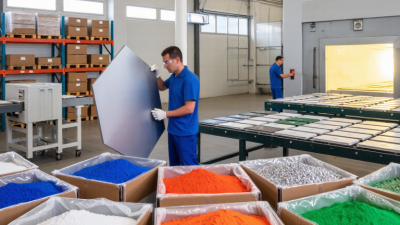
China Best Powder Coating Dip Manufacturers and Suppliers
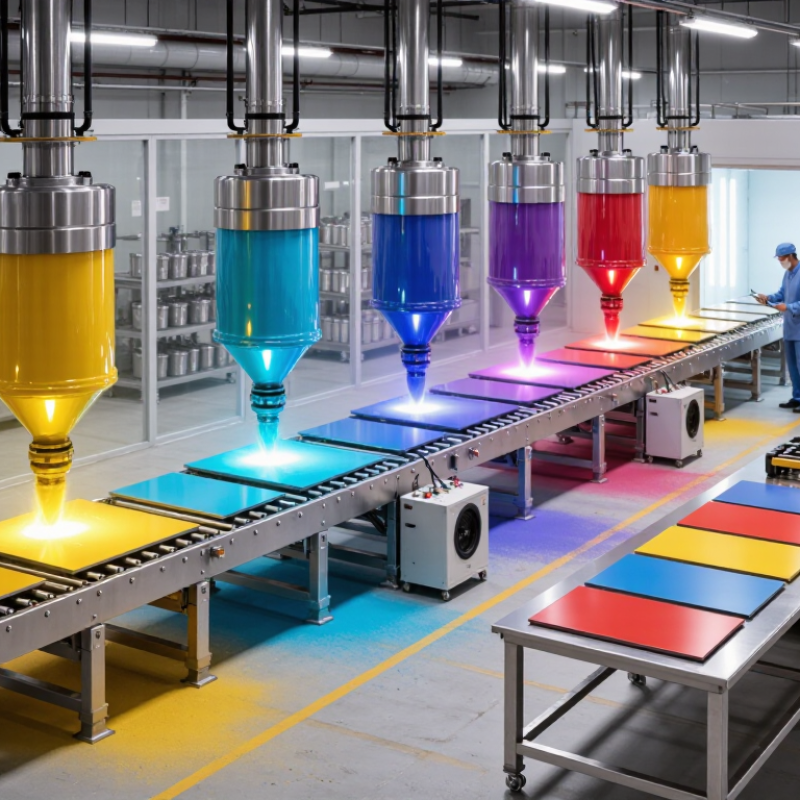
Powder coating dip products begin with carefully selected resin, pigments, and performance additives. Manufacturers blend these ingredients, melt them into a uniform compound, then cool and grind it into fine powder. Screening helps control particle size. Consistent particles support even coverage when heated parts enter a fluidized powder bed. The coating melts and forms a continuous layer as the part cools.
Quality checks can include color comparison, particle-size measurement, and trial coating on sample parts. Results may vary with part temperature, shape, and powder storage, so a sample run matters. No process is flawless; small shade differences can appear between batches. Reliable suppliers share technical data, safety information, packaging details, and batch identification. They should also discuss suitable applications and realistic lead times before confirming an order.
Tips: Ask for a test quantity before placing a large order. Keep powder sealed, dry, and away from heat. Check the recommended part temperature and coating thickness with the supplier. Record batch numbers during production; this simple step can help investigate uneven coverage later.
Fluidized-bed dip coating is commonly used when a thicker coating is needed, while electrostatic spray is suited to thinner films.
Ranges shown are typical industry values, not specifications. Actual film thickness depends on the powder, substrate, part temperature, and process settings.
Chinese powder-coating manufacturers and suppliers often support more than product sourcing. Stronger operations can adjust resin systems, powder particle size, and preheating guidance for fluidized-bed dip applications. These details matter. A thick, uneven layer around a metal part can affect fit and finish.
Grand View Research estimated the global powder coatings market at USD 13.36 billion in 2023, with projected annual growth of 5.4% from 2024 to 2030. This market context puts pressure on suppliers to deliver consistent batches, not just attractive samples. Buyers can ask for technical data sheets, batch traceability, and test results for coating thickness, adhesion, and impact resistance. Ask how production teams control these measures. A polished brochure is not proof.
Export-ready suppliers may also offer sample trials, packaging suited to long-distance shipping, and clear guidance on storage and application. For dip coating, practical support should cover substrate preparation, preheat conditions, and troubleshooting pinholes or thin edges. No supplier is perfect. Even experienced teams may need another trial when part geometry or operating conditions change. Compare documented results under your own process before placing a large order.
| Capability | Common Manufacturing Options | What Buyers Should Verify |
|---|---|---|
| Coating processes | Electrostatic powder spraying and fluidized-bed dip coating are established powder-coating processes. They use different application methods and suit different part geometries and coating requirements. | Confirm which process is available, whether it suits the part’s size and shape, and whether the supplier can provide sample parts for evaluation. |
| Substrate compatibility | Powder coating is commonly applied to conductive metal parts, including steel, galvanized steel, aluminum, and selected alloys. Surface preparation and coating-system selection depend on the substrate. | Provide the exact material, surface condition, and intended service environment; request confirmation of pretreatment compatibility. |
| Surface preparation | Preparation may include degreasing, rinsing, conversion treatment, abrasive blasting, or other substrate-specific cleaning and pretreatment steps. | Ask for the process sequence, pretreatment controls, and how the supplier checks cleanliness and coating adhesion. |
| Powder selection | Available powder families may include epoxy, polyester, epoxy-polyester hybrid, and polyurethane formulations. Selection depends on indoor or outdoor exposure, appearance, and chemical or mechanical requirements. | Confirm the powder type, color, gloss, texture, and applicable technical data sheet. Verify that the formulation matches the intended use. |
| Film thickness | Many powder-coated applications use a dry-film thickness in the approximate range of 60–120 μm, but the suitable thickness varies by powder, part geometry, and performance specification. | Agree on the required thickness and measurement locations. Request inspection records using an appropriate coating-thickness gauge. |
| Curing capability | Coated parts are heated according to the powder manufacturer’s specified time-and-temperature schedule. The required part-metal temperature and cure time vary by formulation and part mass. | Ask how oven temperature is monitored and whether the supplier can verify the part-metal temperature profile for representative loads. |
| Part size and handling | Conveyorized or batch lines can handle different part sizes and production volumes. Maximum part dimensions depend on the booth, oven, fixtures, and available handling equipment. | Provide drawings, dimensions, weight, hanging points, and expected order volume; confirm fixture marks and allowable contact areas. |
| Color and finish control | Common finish options include solid colors, metallic effects, gloss levels, and textured surfaces, subject to powder availability and process capability. | Approve a physical sample or agreed color standard, and define acceptable limits for color, gloss, texture, and visible defects. |
| Quality inspection | Typical checks may include visual appearance, coating thickness, adhesion, cure, and, where specified, impact, flexibility, or corrosion-performance testing. | Specify applicable test methods and acceptance criteria in advance. Request inspection results and traceability for the production lot. |
| Production and export support | Suppliers may offer prototype work, batch production, packaging, and export preparation; available services differ by facility and project. | Confirm sample lead time, production capacity, packaging requirements, documentation, and the agreed delivery schedule before placing an order. |
Note: These are general industry considerations, not guaranteed specifications for every supplier. Confirm process limits, performance requirements, and acceptance criteria directly with the manufacturer for each project.
Choosing a powder coating supplier takes more than comparing color charts. Grand View Research’s 2024 market report valued the global powder coatings market at about USD 13.1 billion in 2023, reflecting a broad and varied supply base. That figure says little about an individual factory’s consistency. Ask for recent batch certificates, safety data sheets, and traceability records. Small details matter. Check whether the supplier tests adhesion, impact resistance, and gloss using recognized methods such as ASTM D3359, D2794, and D523. Request results from the actual production batch, not only a sample made for sales.
Compliance should match the product’s destination and intended use. Review the applicable chemical and labeling requirements with qualified personnel, and check whether the supplier’s quality system is independently certified. A polished certificate is not proof of a stable batch. Ask how the factory controls powder storage, particle size, and curing conditions; request a trial panel cured in your own oven when possible. Customization should cover more than color. Discuss substrate, film thickness, cure window, texture, and packaging, then record agreed tolerances in the purchase specification. Ask for evidence. One practical weakness remains: test panels may not reproduce every real-world surface or operating condition. Plan a production trial before approving large orders.
Choosing a Chinese powder coating supplier starts with the part, not the price list. Share the base material, dimensions, expected finish, and operating environment. A steel bracket for indoor use needs different testing from an aluminum panel exposed to sun and rain. Be specific about color, gloss, and acceptable coating thickness.
Ask how the supplier handles surface preparation, curing, and inspection. Request technical data sheets and sample panels made with your actual material. Check whether the supplier measures film thickness and records results by batch. Small details matter. A consistent finish can still fail if edges are thin or pretreatment is uneven. One overlooked corner can become a costly rework.
Compare production capacity, sample timing, packaging, and communication before placing a large order. Ask how changes are documented and who will answer technical questions during production. A video call around the coating line can clarify equipment and workflow, though it cannot replace a sample test. No checklist catches everything. I would leave time for one trial run; that may feel cautious, but skipping it is often harder to explain later.