What Is Natrium Formate and What Is It Used For?
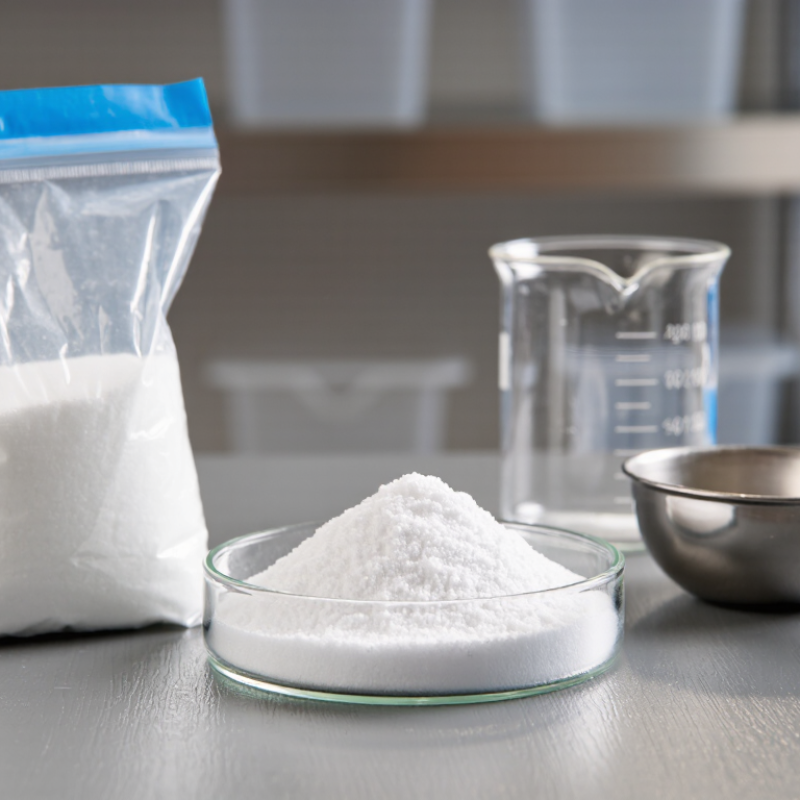
Natrium Formate, commonly called sodium formate, is the sodium salt of formic acid. It is a white, water-soluble solid, usually supplied as a fine powder or granules. In a plant, that can mean sealed bags, careful moisture control, and clear batch records. Simple chemistry; practical handling still matters.
Its applications span several industries. Sodium formate is used in leather processing, textile dyeing, and some drilling-fluid formulations. It also serves as a chemical intermediate and a component in certain de-icing products. The European Chemicals Agency’s substance information and PubChem’s compound record provide useful reference points for identity and basic properties. Supplier technical data sheets add details such as assay, storage, and product grade. These distinctions matter: an industrial grade should not be assumed suitable for every process.
Market figures need care. Industry reports may group sodium formate with broader chemical or formate categories, so estimates can differ in scope and method. A number without its date, region, and definition can mislead. This introduction therefore avoids presenting an unverified market-size figure. It also avoids assigning a quotation to a named Natrium Formate specialist: without a traceable publication, doing so would create false authority. That limitation is worth stating plainly. The sections ahead examine what the compound is, how manufacturers and users apply it, and which specifications help buyers assess a product reliably.
Chemical Identity and Molecular Structure of Sodium Formate
Sodium formate, sometimes called natrium formate in other languages, is the sodium salt of formic acid. Its chemical formula is HCOONa, also written as CHNaO₂. In solid form, it is best described as an ionic compound made of sodium ions and formate ions, not as separate, intact molecules. That distinction matters. The formate ion, HCOO⁻, contains one carbon atom bonded to two oxygen atoms and one hydrogen atom. Its negative charge is shared across the oxygen atoms, giving the two carbon–oxygen bonds similar character.
The formula looks simple, but the arrangement helps explain the substance’s behavior. In crystals, sodium ions interact with neighboring formate ions in a repeating structure. When dissolved in water, the ions separate and move through the solution. Sodium formate is used in some industrial processes, including as a buffering or reducing agent, and in certain heat-transfer or deicing formulations. Its suitability depends on the application and the product’s purity; the name alone does not guarantee performance.
Tips: When reading a label or specification, check the formula, purity, and intended grade. HCOONa is a useful identifier, but it does not describe every property of a solution. I would not infer handling needs from the formula alone.
What Is Natrium Formate and What Is It Used For? — Chemical Identity and Molecular Structure of Sodium Formate
| Category | Information | Details |
| Common name | Sodium formate | The sodium salt of formic acid; “natrium” is another name for sodium. |
| Chemical formula | CHNaO2 | Also written as HCOONa. |
| Molar mass | 68.01 g/mol | Calculated from the atomic masses of carbon, hydrogen, sodium, and oxygen. |
| CAS Registry Number | 141-53-7 | Identifier for anhydrous sodium formate. |
| Molecular structure | H–C(=O)–O− · Na+ | An ionic compound made up of sodium cations and formate anions. The negative charge is delocalized across the two oxygen atoms in the formate ion. |
| Physical appearance | White crystalline solid | Typically supplied as a solid powder or crystals. |
| Water solubility | Highly soluble | Dissolves readily in water; solubility increases as water temperature rises. |
| Thermal behavior | Decomposes on strong heating | Reported melting or decomposition temperatures can vary with measurement conditions and sample purity. |
| Textile processing | pH adjustment and processing aid | Used in some dyeing and textile-treatment processes to help control process conditions. |
| Leather processing | Processing auxiliary | Used in certain leather-tanning and finishing operations. |
| De-icing | De-icing formulation ingredient | May be used in some runway and pavement de-icing formulations; suitability depends on the application and formulation. |
| Oil and gas operations | Brine component | Used in some aqueous drilling, completion, and workover fluids. |
| Handling | Follow the product safety data sheet | Avoid unnecessary dust formation and contact with eyes. Use appropriate protective equipment and workplace controls. |
Note: Physical properties and recommended handling practices may differ by grade, purity, and supplier specifications. Consult the applicable safety data sheet and technical documentation for specific use conditions.
Key Physical and Chemical Properties
Sodium formate, also called natrium formate, has the formula HCOONa and a molar mass of about 68.01 g/mol. In ordinary room conditions, it appears as a white, odorless crystalline solid. A small sample feels dry and granular, though moisture can make the crystals clump. It dissolves readily in water and is much less soluble in many organic solvents. Check the product specification when exact solubility matters; temperature and purity can affect reported values.
Its aqueous solutions are usually mildly alkaline because the formate ion reacts with water. The pH is not a fixed property of the dry solid; it depends on solution concentration and conditions. Sodium formate can react with strong acids to form formic acid.
On strong heating, it may decompose, so a single melting-point figure can be misleading: references may report a value near 253°C alongside decomposition. That distinction is easy to miss.
Useful details, but not the whole story. In practice, moisture, particle size, and storage conditions can change how a sample handles or dissolves. For reliable comparisons, use measured values for the specific grade and test conditions rather than treating general reference numbers as exact.
How Sodium Formate Is Produced
Sodium formate, also called natrium formate, is commonly made by neutralizing formic acid with a sodium base. In a controlled plant process, sodium hydroxide or sodium carbonate reacts with formic acid to form the salt and water or carbon dioxide. The resulting solution is concentrated, then cooled so sodium formate crystals can form. These are separated and dried. Simple chemistry, careful control.
Another industrial route uses carbon monoxide and sodium hydroxide under elevated pressure. Sodium formate can also arise as a by-product during the manufacture of certain polyhydric alcohols. The route matters: it can affect yield and the impurities that need removing. Producers check concentration, moisture, and residual contaminants before the material is packed. Crystals may look clean, but appearance alone cannot confirm purity. That distinction is easy to miss. In practice, conditions and purification steps vary by process, so a general description cannot replace a product specification or analytical test.
Common Industrial and Commercial Uses
Sodium formate, also called natrium formate, is used in leather processing, textile operations, and specialty fluids. The European Commission’s 2013 Best Available Techniques Reference Document for tanning identifies formate salts among chemicals used in leather processing. In chrome tanning, sodium formate can help regulate acidity and support more even chrome penetration. Small changes in dosing matter. A poorly controlled bath may produce uneven results, so operators still need to check pH and material condition.
In textile dyeing, it can serve as a processing aid, while in industrial fluids it may contribute to density and flow control. NIST lists sodium formate’s molar mass as 68.01 g/mol, a useful figure for calculating solution recipes, not a guarantee of performance. Details matter. Handling and outcomes depend on concentration, temperature, and the surrounding chemicals. Sodium formate is also used in some deicing formulations, but its suitability varies with surface conditions and environmental requirements. The U.S. Federal Aviation Administration’s airport deicing guidance emphasizes selecting and managing products for site-specific conditions; a single chemical is rarely the whole answer. These uses can sound straightforward on paper. In practice, wastewater loading, corrosion, and process consistency deserve careful review before changing a plant recipe.
Safe Handling and Environmental Considerations
Sodium formate is the sodium salt of formic acid, usually supplied as a white, water-soluble solid. It is used in some industrial processes, including textile treatment, chemical manufacture, and certain drilling fluids. Its hazards depend on the product’s concentration, impurities, and form. Dust matters. Read the current safety data sheet before handling, and use suitable gloves, eye protection, and ventilation. Avoid breathing dust or getting the material in your eyes.
Keep containers closed, dry, and clearly labeled. If powder spills, avoid sweeping in a way that sends dust into the air; follow workplace procedures and the safety data sheet for cleanup. Do not wash it into a drain or allow it to reach soil or surface water. Although sodium formate can break down under some environmental conditions, that does not make uncontrolled release harmless. Local conditions and the amount released matter, and cleanup advice can vary.
Tips: Use a scoop gently, keep food and drink away from the work area, and wash hands after handling. Store spill supplies nearby. One detail is easy to overlook: a small spill can spread when damp shoes or tools carry residue elsewhere. Dispose of collected material according to the product guidance and local requirements.