China Top 10 430 Stainless Steel Strip Manufacturers?
China has become a major source of stainless steel strip for appliance, automotive, medical, and industrial applications. This guide examines China’s top 10 430 Stainless Steel Strip manufacturers through practical purchasing criteria, not promotional claims alone. The selection considers production capacity, surface quality, dimensional control, delivery performance, and export experience.
Details matter. A reliable manufacturer should provide clear material certificates, coil or strip specifications, and traceable batch information. Buyers should also review surface finishes, including 2B, BA, and brushed options, because appearance and corrosion performance can differ significantly. Factory equipment offers useful evidence. Slitting lines, annealing furnaces, precision gauges, and protective packaging often reveal how carefully a supplier manages production.
However, no ranking remains perfect. Company capabilities, lead times, and certifications may change. Public information can also be incomplete. Therefore, this overview should support supplier research rather than replace direct verification. Request recent test reports, sample strips, inspection records, and references from comparable industries. Ask how the manufacturer controls edge burrs, thickness tolerance, coil tension, and packaging moisture. These details can affect stamping results and final product quality.
The featured companies represent different strengths, from high-volume production to customized widths and export-focused service. Some may suit demanding automotive projects, while others fit standard appliance components or smaller orders. Careful comparison is essential. A lower price may hide inconsistent flatness or longer delivery times. Practical evaluation creates a more dependable purchasing decision.
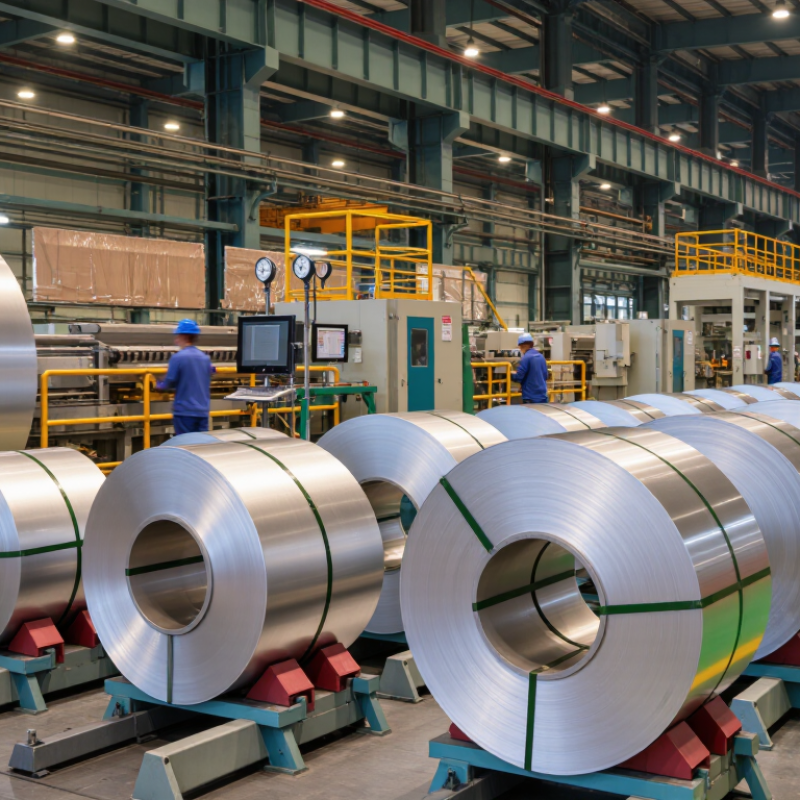
What Is 430 Stainless Steel Strip?
430 stainless steel strip is a thin, flat product made from a ferritic stainless steel grade. It typically contains chromium, with little or no nickel. This composition gives the strip magnetic behavior and moderate resistance to rust, moisture, and oxidation.
The surface matters greatly. A bright finish may suit visible parts, while a dull finish can support later forming or polishing. In practical fabrication, 430 strip is often used for appliance panels, kitchen equipment, trim, clamps, and automotive components. It cuts cleanly when tooling is properly adjusted. Tight bends can be more demanding than expected.
430 strip handles heat reasonably well. However, it does not resist chlorides as strongly as many austenitic grades. Saltwater, coastal air, and harsh cleaning chemicals may leave stains or surface corrosion. That limitation is easy to overlook. A cleaner surface is not always a stronger surface.
When comparing manufacturers, buyers should check thickness tolerance, width accuracy, hardness, edge condition, coil weight, and test documentation. Chemical certificates and mechanical results improve traceability. Surface inspection under suitable lighting can reveal scratches, pits, or uneven polishing. One detail deserves more attention: actual service conditions should guide grade selection, not appearance alone. A strip that looks excellent in a warehouse may perform poorly beside road salt or constant condensation. Temperature, forming direction, and required flatness also deserve review before purchasing.
How to Evaluate Chinese 430 Stainless Steel Strip Manufacturers
China’s large stainless sector creates many 430 strip suppliers, but scale alone proves little. World Stainless reported 58.4 million tonnes of global stainless crude steel production in 2023. China contributed the largest share. Buyers should still inspect each factory’s process controls, not only its annual output claims.
A credible manufacturer provides traceable heat numbers, chemical analysis, and mill test certificates. For 430 stainless steel, verify chromium content against the agreed specification, commonly around 16–18% under ASTM A240. Check thickness tolerance, strip width, edge condition, surface finish, and coil weight. A sample coil should be measured at several points, including its head and tail. Small differences can become serious during stamping.
Audit the annealing and pickling lines. Ask how the supplier controls hardness, flatness, and surface defects. Independent laboratory testing can confirm tensile strength and corrosion performance. World Stainless data is useful for market context, but it does not validate one supplier. Certification needs checking.
Request recent production records.
A factory visit may reveal more than a polished website. Look for calibrated gauges, clean storage, and clear segregation of grades. Yet even this method is imperfect; one visit cannot represent every batch. I would also compare three consecutive inspection reports, because a single excellent sample can mislead procurement decisions.
China’s Top 10 430 Stainless Steel Strip Manufacturers
China’s Top 10 430 Stainless Steel Strip Manufacturers are often judged by more than production scale. Reliable suppliers show stable chemistry, precise thickness control, and repeatable surface quality. Grade 430 is commonly used in appliances, kitchen equipment, decorative panels, and industrial components. Its ferritic structure offers good corrosion resistance and magnetic performance. However, it is not ideal for every forming application.
In practical supplier evaluations, I examine mill certificates, coil tolerances, edge condition, and annealing records. A capable manufacturer should explain whether the strip is 2B, BA, brushed, or custom finished. Trial samples matter. They reveal scratches, waviness, burrs, and inconsistent hardness that brochures may hide. Strong manufacturers also maintain traceable batch numbers and clear inspection procedures. No ranking is perfect. A large factory may still miss a narrow tolerance, while a smaller producer may provide closer technical attention.
Tips: Request samples before placing a bulk order. Confirm thickness, width, tensile strength, and surface requirements in writing. Ask for recent test reports, not only standard templates. Check packaging carefully, especially for long-distance shipping. Moisture damage can ruin a clean surface. It is also wise to compare lead times, minimum order quantities, and after-sales communication. The cheapest quotation may become expensive after sorting, polishing, or replacement.
China Top 10 430 Stainless Steel Strip Manufacturers — ASTM 430 Material Benchmark
The chart presents the chemical composition limits commonly used to evaluate 430 stainless steel strip supplied by manufacturers. Values are based on ASTM A240/A240M Type 430 requirements and are shown in weight percent.
Chromium is specified at 16.00–18.00%, while carbon, manganese, silicon, phosphorus, and sulfur are controlled at maximum levels. These material benchmarks support supplier qualification without displaying company-specific or brand-specific data.
Products, Production Capacity, and Quality Standards
China Top 10 430 Stainless Steel Strip Manufacturers: Products, Production Capacity, and Quality Standards
The strongest 430 stainless steel strip manufacturers offer slit coils, precision strips, and custom-width rolls. Grade 430 usually contains about 16–18% chromium and remains magnetic after forming. Product sheets should state thickness tolerance, width range, surface finish, hardness, and edge condition. Production capacity needs careful checking. A large stainless mill may report crude steel output, not 430 strip capacity. World Stainless reported 58.4 million tonnes of global stainless steel production in 2023. That figure shows market scale, but it cannot prove one supplier’s strip capability. Ask for annual 430 output, line width, minimum thickness, and recent delivery records.
Quality claims should match recognized standards. ASTM A240 defines general requirements for stainless steel plate, sheet, and strip. ASTM A480 covers dimensions, tolerances, and surface finishes. EN 10088 may support European purchasing requirements. Reliable manufacturers normally provide heat numbers, mill test certificates, chemical analysis, tensile results, hardness data, and surface inspection records. ISO 9001 certification helps, but it does not replace product testing. This distinction is often missed.
Tips: Compare capacity by product, not factory size. Request three recent inspection reports. Check whether tolerances apply before or after slitting. Confirm surface quality under the buyer’s lighting conditions. A practical trial coil remains valuable, because polished samples can hide edge burrs or waviness. Data can look impressive, yet production consistency may still need verification.
How to Select the Right Manufacturer for Your Needs
China Top 10 430 Stainless Steel Strip Manufacturers: How to Select the Right Manufacturer for Your Needs
Choosing among leading 430 stainless steel strip manufacturers requires more than comparing prices. Confirm the steel grade, thickness tolerance, width range, surface finish, and temper condition. Ask for recent mill test certificates and independent inspection records. These documents should match the actual coil, not a generic sample.
Request a small trial order before signing a large contract. Inspect the strip under bright light for scratches, edge cracks, stains, and uneven slitting. Measure several points across the coil because one accurate sample proves little. A reliable manufacturer should explain its annealing, rolling, and cutting controls clearly. It should also provide heat-number traceability and realistic production dates.
Communication matters during problems. Ask how the factory handles width errors, delayed shipments, or failed tests. Written corrective-action procedures show stronger quality management. Check whether the supplier understands your forming process, packaging needs, and storage conditions. Low pricing can hide unstable tolerances or excessive minimum order quantities.
Do not trust polished brochures alone. Review factory photos, audit production areas, and speak with technical staff. A video inspection helps, but it cannot replace physical testing. No manufacturer is perfect. Even a careful evaluation may miss a process weakness. Leave room for a second sample and a clear rejection clause. That small safeguard can protect your schedule and reduce costly material waste.