Biostimulants are increasingly discussed as tools for supporting crop performance, but no single product works equally well everywhere. Seaweed extracts, humic and fulvic substances, protein hydrolysates, and microbial inoculants are among the most common groups. Each may influence plant processes differently, from root development to nutrient uptake or stress response. Results depend on the crop, soil, climate, application timing, and product formulation.
The phrase “top biostimulants” can be misleading. A product that performs well in a greenhouse trial may produce modest results in a dry field or different soil. Look for evidence from replicated trials on relevant crops, clear ingredient information, and practical application guidance. Field observations matter, too: stronger roots are useful, but they do not guarantee a larger harvest. Not always.
This guide compares widely used biostimulant categories and explains where their potential benefits—and limitations—may lie. It also considers how growers can assess claims, choose products suited to local conditions, and track outcomes across treated and untreated plots. Even careful comparisons have gaps; weather and farm practices can complicate results. Treat promising claims as questions to test, not promises to accept.
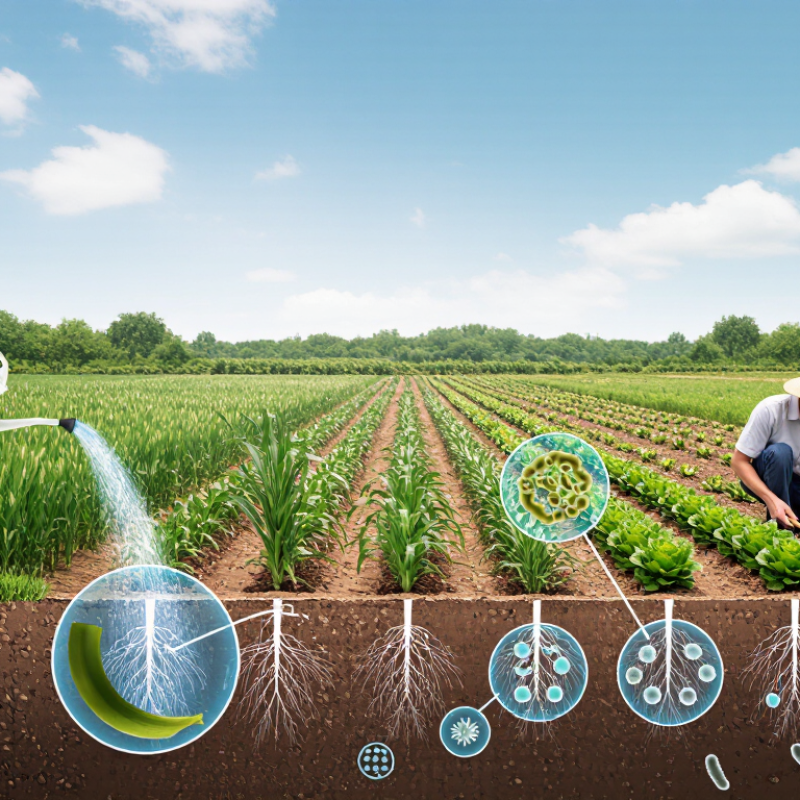
Crop biostimulants are materials that support plant processes, rather than supplying major nutrients or directly controlling pests. The European Union’s Fertilising Products Regulation (2019/1009) defines them by their effects on nutrient-use efficiency, stress tolerance, crop quality, or nutrients available in soil. In practice, products may contain seaweed extracts, beneficial microorganisms, humic substances, or protein-derived compounds. Their composition matters.
They may influence root growth, nutrient uptake, or plant signaling. A treated seedling, for example, might develop denser roots that explore more soil after transplanting. Effects depend on crop, dose, timing, soil, and weather. No guaranteed response. DunhamTrimmer’s 2024 global market report estimated worldwide biostimulant sales at approximately US$3.5 billion in 2023, indicating strong commercial interest—not proof that every treatment improves yield. Growers should compare treated and untreated strips under the same field conditions, then record yield and quality. Results can be uneven, and mechanisms remain under study. That uncertainty deserves attention. A product label alone cannot replace local trials or careful interpretation of results.

Crop biostimulants include several distinct groups, and each works differently. Microbial products contain beneficial bacteria or fungi that interact with roots and soil. Some may help plants access nutrients or cope with stress, but results depend on the crop, soil, and application conditions. They are not instant fixes.
Seaweed extracts are used to support growth during demanding stages, such as transplanting or fruit development. Their effects can vary with the seaweed source and processing method. Humic and fulvic substances, often derived from decomposed organic matter, may influence nutrient availability and root-zone conditions. Small differences matter.
Protein hydrolysates and amino-acid products provide compounds that can affect plant metabolism. Chitosan and certain mineral-based materials, including silicon, are also used to help crops respond to stress. The evidence is not equally strong for every product or crop. That deserves attention. Check the label, application rate, and field conditions, then compare treated rows with untreated ones. A greener leaf is not proof of a better harvest. Results can be uneven, and biostimulants cannot replace sound irrigation, nutrition, or pest management.
Crop biostimulants include seaweed extracts, humic substances, protein hydrolysates, and microbial inoculants. They are not interchangeable. Depending on the formulation, they may support root development, nutrient uptake, or plant responses to drought and salinity. A 2018 global meta-analysis in PLOS ONE examined 1,726 field experiments and found biofertilizers increased crop yields by about 16% on average (Schütz et al.). That is useful evidence, but biofertilizers are only one related category; the figure does not predict results for every biostimulant or field.
Resilience takes more than a spray. In dry soil, a stronger root system may help a crop access remaining moisture, while improved nutrient use can support steady growth. But results depend on crop, soil, weather, application timing, and product composition. A review by du Jardin in Scientia Horticulturae (2015) discusses biostimulant categories and their varied effects on plant processes. Practical trials matter. Compare treated rows with untreated strips, and record rainfall, growth, and yield. A pale leaf is not automatically a biostimulant problem; it may signal nutrient shortage or root damage. That distinction is easy to miss.
| Biostimulant type | Typical source or components | How it may support crops | Situations where it may be useful | Important considerations |
|---|---|---|---|---|
| Seaweed extracts | Extracts from marine algae; may contain polysaccharides, betaines, and other naturally occurring compounds. | May support root development, nutrient-use processes, and plant responses to abiotic stress. | Often considered during establishment, active vegetative growth, or periods of environmental stress. | Results depend on algal species, extraction method, crop, timing, and growing conditions; responses are not guaranteed. |
| Humic and fulvic substances | Complex organic substances associated with decomposed plant and other organic matter; humic and fulvic fractions differ in solubility and properties. | May influence root growth, nutrient availability, and nutrient uptake, particularly through interactions in the root zone. | May be used in soil or fertigation programs where root-zone development and nutrient management are priorities. | Effectiveness varies with product composition, soil properties, pH, crop, and application method; these substances do not replace balanced fertilization. |
| Protein hydrolysates and amino acids | Mixtures of peptides and amino acids produced by breaking down plant or animal proteins. | May affect plant metabolic activity, nutrient assimilation, root growth, and responses to environmental stress. | May be considered during periods of rapid growth or when crops face short-term abiotic stress. | Composition and plant response differ among products. They should not be treated as a substitute for the crop’s required nutrient supply. |
| Beneficial soil microorganisms | Selected bacteria, including plant growth-promoting rhizobacteria, and fungi such as arbuscular mycorrhizal fungi. | Depending on the organism, may support nutrient mobilization, root-zone activity, or access to water and nutrients. Mycorrhizal fungal hyphae can extend beyond roots and help acquire relatively immobile nutrients such as phosphorus. | Potentially useful where compatible crops and suitable soil conditions allow the introduced microorganisms to establish. | Performance depends on strain, crop compatibility, soil conditions, storage, and application. Some fungicides or other treatments may affect microbial viability. |
| Chitosan and other biopolymer-based products | Chitosan, a material derived from chitin, and related naturally derived biopolymers. | May prime plant defense responses and influence growth or tolerance to certain stresses. | May be evaluated as part of a broader crop-management program where plant resilience is a goal. | Responses depend on formulation, dose, crop, and application timing. Biostimulant use should not be assumed to provide disease control. |
| Silicon-based products | Plant-available forms of silicon, such as soluble silicates or stabilized silicic-acid formulations. | In crops that take up silicon, it may contribute to stronger tissues and improved tolerance to some abiotic stresses. | May be considered for silicon-accumulating crops or where soil tests and local agronomic guidance indicate a potential need. | Benefits vary by species, available soil silicon, and product form. Regulatory classification as a biostimulant differs among jurisdictions. |
Note: Biostimulants support specific plant or soil processes; they are not substitutes for sound soil management, suitable irrigation, or a crop-specific nutrient program. Test products under local conditions and follow applicable regulations and label directions.
Choosing a biostimulant starts with the crop’s growth stage and the problem you can observe. For transplanted tomatoes, a suitable seaweed-based product may support recovery after planting, especially when roots face brief heat or water stress. Responses vary, so it should not replace irrigation, balanced nutrition, or disease management. Timing matters.
For leafy greens, growers may consider amino-acid or seaweed formulations during periods of rapid growth, while cereal crops may benefit from microbial inoculants selected for the crop and local soil. These microbes need appropriate moisture and temperature to establish; a cold, dry seedbed can limit their performance. Humic substances may be more relevant where soil structure or nutrient availability is a concern, but they are not a universal fix.
Match the product’s directions to the crop, application method, and growing conditions. Test a small treated strip beside an untreated one, then record the rate, weather, soil moisture, and visible crop response. Keep records. Results can be uneven, and even careful notes may not explain every difference. That uncertainty is a reason to test locally, not to assume every crop needs a biostimulant.
Biostimulants work best when the application matches the crop stage and product label. Foliar sprays can reach leaves quickly, while seed treatments and root-zone drenches target early growth. MarketsandMarkets’ 2023 industry report projected 11.7% annual growth for the biostimulants market through 2027. That signals rising interest, not guaranteed yield gains. Results still depend on crop, formulation, and field conditions.
Timing matters. Apply foliar products during cooler hours to reduce rapid drying, and avoid spraying before heavy rain. Check water quality, tank compatibility, and the recommended dose; hard water or an unsuitable mix can affect performance. Keep untreated strips beside treated rows. Record weather, crop stage, and yield, then compare results across seasons. One trial can mislead. I would not assume a response just because plants look greener.
Tips: Calibrate the sprayer with clean water first. Cover leaves evenly, including lower foliage, without runoff. Follow label directions, and test a small area before treating the whole field.