Lubricating Oil Additives help oils withstand heat, pressure, oxidation, and contamination. For global buyers, choosing them involves more than comparing product brochures. A detergent package that keeps an engine clean may not suit an industrial gearbox. An antiwear additive must also work with the base oil, seals, and operating temperature. Small differences matter. A cold-start test, a hot-running bearing, or a foaming sample can reveal problems that a specification sheet misses.
Tribologist Professor Hugh Spikes’s research offers a useful reminder: lubricant performance depends on the conditions inside the contact, not just the ingredients on a label. Buyers can use that principle when comparing antioxidants, dispersants, friction modifiers, viscosity index improvers, and corrosion inhibitors. Check test data, application fit, supply consistency, and compatibility with the finished lubricant. Ask for clear technical documentation, too. Details count.
This guide introduces ten widely relevant additive types and the questions buyers should ask about each. It is a starting point, not a universal ranking. Formulations vary, and an additive that performs well in one blend may disappoint in another. That part is easy to overlook. Real-world trials and qualified technical advice remain important, especially when equipment operates across different climates or duty cycles. A neat top-ten list can simplify decisions; it can also hide trade-offs. Use it to focus evaluation, not replace it.
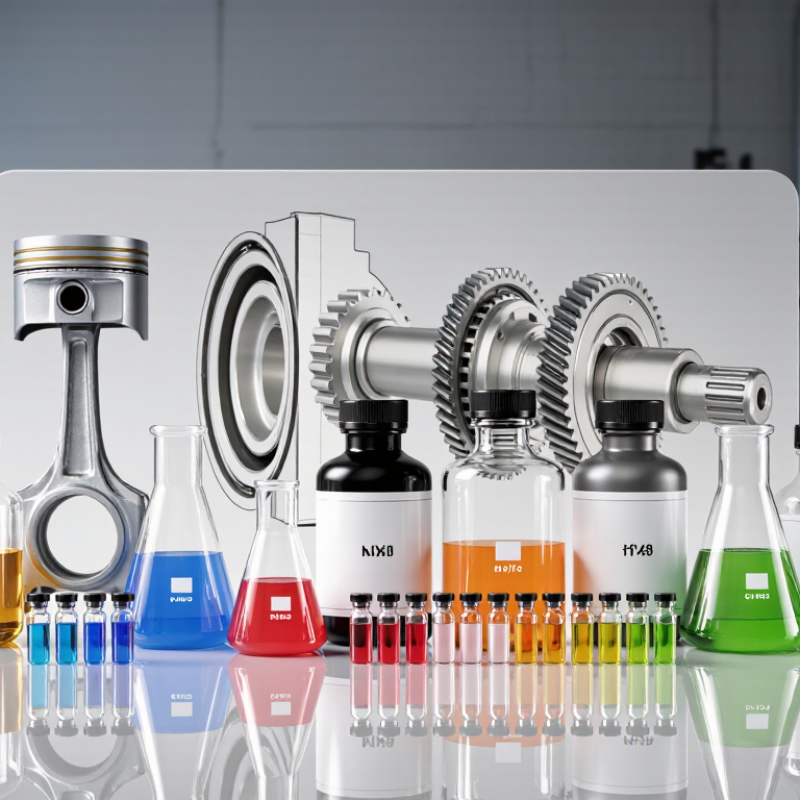
Lubricating oil is more than a slippery liquid. It is usually a base oil blended with carefully selected additives that help it perform under specific operating conditions. In an engine, for example, heat and combustion by-products can gradually thicken or degrade the oil. Antioxidants slow oxidation, while detergents help limit deposits on hot surfaces. Dispersants keep small contaminants suspended so they can be captured by the filter. Anti-wear additives help protect metal surfaces when the oil film becomes thin. Small ingredients, real consequences.
These additives matter because equipment faces changing loads, temperatures, and start-up conditions. A cold morning can make oil flow slowly; a heavily loaded bearing can place intense pressure on a thin film. Viscosity modifiers and pour-point depressants may help address some of these challenges, but no additive works in isolation. Formulations balance ingredients, and adding more is not automatically better. The wrong oil can also cause trouble, even when its label sounds suitable. Check the equipment maker’s specifications, operating conditions, and maintenance guidance. Used-oil analysis can reveal wear metals or contamination, though it does not explain every problem. A test is a clue, not a verdict.
| # | Additive Type | What It Does | Common Chemistry | Typical Applications | Indicative Use Level | Buyer Considerations |
|---|---|---|---|---|---|---|
| 1 | Dispersants | Help keep soot, oxidation products, and other small contaminants suspended, reducing sludge and deposit formation. | Succinimide dispersants; commonly based on polyisobutylene-derived chemistry. | Engine oils, especially formulations designed for engines exposed to soot and oxidation products. | Often about 2–8% of the finished lubricant. | Check compatibility with detergents and other additives, as well as performance requirements for the intended engine-oil category. |
| 2 | Detergents | Neutralize acidic by-products and help control deposits on hot engine surfaces. | Overbased or neutral calcium, magnesium, or sodium sulfonates, phenates, and salicylates. | Engine oils and some industrial lubricants. | Often about 1–5% of the finished lubricant. | Consider detergent type, alkalinity contribution, ash limits, and the balance with dispersants and antiwear additives. |
| 3 | Antioxidants | Slow oxidation, which can contribute to viscosity increase, acidity, varnish, and sludge. | Hindered phenols, aromatic amines, and sulfur- or phosphorus-containing antioxidant chemistries. | Engine oils, turbine oils, hydraulic fluids, and other lubricants exposed to heat or air. | Often about 0.2–2% of the finished lubricant. | Evaluate operating temperature, expected service life, compatibility, and any restrictions on particular chemistries. |
| 4 | Anti-wear Additives | Form protective films on surfaces to reduce wear under boundary or mixed lubrication conditions. | Zinc dialkyldithiophosphate (ZDDP) and selected phosphorus- or sulfur-containing chemistries. | Engine oils, hydraulic fluids, and some industrial gear and circulation oils. | Often about 0.3–1.5% of the finished lubricant, depending on chemistry and performance needs. | Check metal compatibility, seal compatibility, and limits on phosphorus or other elements in the target application. |
| 5 | Extreme-Pressure (EP) Additives | Help prevent severe scuffing and welding when gears or other contacts experience high loads. | Sulfurized and phosphorus-containing compounds; some applications use borate chemistry. | Industrial gear oils, metalworking fluids, and selected greases. | Can range from about 1–10% of the finished lubricant, depending strongly on application and chemistry. | Confirm load requirements, copper and other yellow-metal compatibility, and suitability for the equipment and lubricant specification. |
| 6 | Friction Modifiers | Adjust friction to support smoother operation or improved fuel economy in applications designed for lower friction. | Organic fatty compounds, molybdenum-containing compounds, and selected polymeric materials. | Passenger-car engine oils, automatic transmission fluids, and other specialized lubricants. | Often about 0.1–3% of the finished lubricant. | Friction targets are application-specific; verify interaction with clutch materials, seals, and other performance additives. |
| 7 | Viscosity Index Improvers | Reduce the rate at which viscosity changes with temperature, helping oil maintain suitable flow across its operating range. | Olefin copolymers, polymethacrylates, and hydrogenated styrene-diene polymers. | Multigrade engine oils, transmission fluids, and selected hydraulic fluids. | Often about 1–15% of the finished lubricant; the amount depends on polymer type and target viscosity grade. | Assess shear stability, low-temperature performance, concentrate handling, and compatibility with the base oil. |
| 8 | Pour Point Depressants | Help maintain low-temperature flow by modifying wax-crystal growth in susceptible base oils. | Alkylated aromatic polymers and polymethacrylates. | Engine oils, industrial oils, and other mineral-oil formulations requiring improved low-temperature behavior. | Often about 0.1–1% of the finished lubricant. | Effectiveness depends on base-oil composition; test the complete formulation at the relevant low temperatures. |
| 9 | Rust and Corrosion Inhibitors | Protect metal surfaces from rust or corrosion caused by water, humidity, or corrosive contaminants. | Metal sulfonates, amine salts, carboxylic-acid derivatives, and other surface-active inhibitors. | Hydraulic oils, turbine oils, circulating oils, and metalworking fluids. | Often about 0.05–0.5% of the finished lubricant. | Consider water exposure, ferrous and non-ferrous metals, demulsibility needs, and compatibility with other additives. |
| 10 | Antifoam Additives | Limit persistent foam and help air bubbles separate from oil, supporting reliable lubrication and system operation. | Silicone-based compounds and non-silicone polymeric antifoams. | Hydraulic, turbine, gear, and other circulating oils. | Usually used at low levels, often in the range of a few to several dozen ppm of active material. | Overdosing can reduce air release or cause other performance issues; confirm dosage and test the finished lubricant. |
Note: Use levels are indicative ranges for finished lubricants, not purchasing specifications. Actual treat rates vary with additive concentration, base oil, formulation, test results, and the applicable performance or equipment requirements.