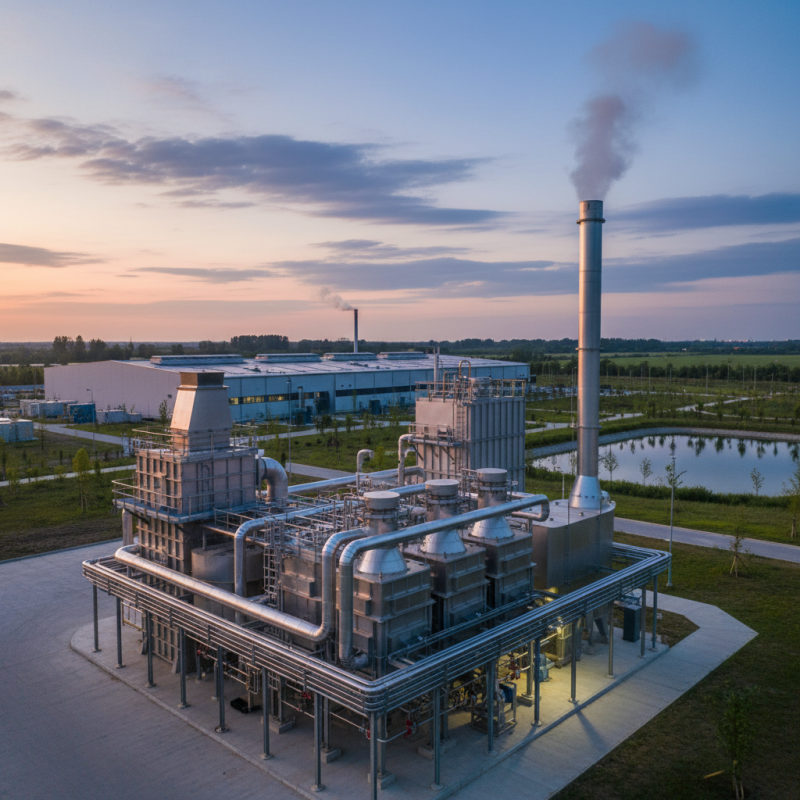
What is Regenerative Oxidizer and How Does It Work?
The Regenerative Oxidizer represents a significant advancement in industrial air treatment technology. It aims to reduce harmful emissions effectively. By utilizing heat exchange methods, it helps to lower operational costs and improve efficiency.
This innovative system captures volatile organic compounds and other pollutants. It then oxidizes these substances into harmless by-products. The technology ensures that industries can meet environmental standards while minimizing their carbon footprints.
Despite its benefits, it's essential to recognize potential challenges. The initial investment can be daunting for some businesses. Regular maintenance and monitoring are crucial for optimal performance. As industries evolve, the Regenerative Oxidizer will play a central role in sustainable practices.
What is a Regenerative Oxidizer?
Regenerative oxidizers are advanced air pollution control devices. They effectively remove volatile organic compounds (VOCs) and other harmful emissions from industrial processes. According to a report by the U.S. Environmental Protection Agency, VOCs contribute significantly to smog and respiratory issues. For manufacturers, using regenerative oxidizers helps meet stringent environmental regulations.
The core principle of regenerative oxidizers is based on thermal oxidation. They utilize a heat exchange process to preheat incoming air using the heat generated from the oxidation of pollutants. A study published in the Journal of Environmental Engineering indicates that these systems can achieve destruction efficiencies over 95%. As a result, they are not only eco-friendly but also economically beneficial by reducing energy costs in operations.
However, the efficiency of regenerative oxidizers can vary. Factors such as operational temperature and the composition of the exhaust can impact performance. Companies often face challenges in optimizing these systems. Regular maintenance is crucial, as neglected units may underperform. Thus, continuous monitoring and adjustment are essential for maintaining high levels of efficiency and compliance.
The Principles of Regenerative Oxidation Technology
Regenerative oxidation technology plays a pivotal role in air pollution control. It works by utilizing heat and chemical reactions to break down harmful pollutants. The process starts with capturing exhaust gases containing volatile organic compounds (VOCs) and other contaminants. These gases pass through a regenerative thermal oxidizer (RTO), where they are heated to high temperatures, often exceeding 700 degrees Celsius.
During this heating phase, the pollutants undergo oxidation reactions. The oxidation process converts hazardous substances into benign byproducts, primarily carbon dioxide and water vapor. Heat retention technology is critical here. RTOs use thermal storage media to capture heat from the exhaust. This heat is then reused, making the process energy-efficient. However, there can be challenges in maintaining consistent temperatures across varying flow rates and pollutant concentrations.
Emerging insights suggest that continuous monitoring can enhance efficiency. Analyzing data helps optimize conditions, but sometimes results fall short of expectations. As with any evolving technology, there are imperfections. Engineers must address issues like potential emissions spikes during startups and shutdowns. Adjustments in operational protocols can mitigate these problems, but ongoing experimentation is essential for improvement. The future of regenerative oxidation technology heavily relies on these insights and adaptations.
How Regenerative Oxidizers Function in Industrial Applications
Regenerative oxidizers play a vital role in industrial applications. They are designed to efficiently reduce harmful emissions from various processes. These systems utilize a two-chamber setup. One chamber captures pollutants, while the other chamber oxidizes them at high temperatures. This cycle significantly lowers exhaust emissions.
In industries like waste management and manufacturing, regenerative oxidizers ensure compliance with environmental regulations. Using these oxidizers can increase the overall efficiency of processes. They can achieve high destruction efficiency, often exceeding 95%. This not only helps in pollution control but also can lead to energy savings.
Tips: Regular maintenance is crucial for optimal performance. Check temperatures and flow rates consistently. Additionally, keep an eye on the filter systems. A clean filter maximizes efficiency, reducing operational issues. Monitoring performance metrics can help identify potential problems early. This proactive approach can save on costly repairs in the long run.
Regenerative oxidizers are not without challenges. Their upfront cost can be significant for smaller operations. Understanding the specific needs and emissions of your facility is essential. Properly sizing the system affects its performance and efficiency. Additionally, operator training on the system is key to ensuring effective use.
Proper implementation can yield substantial benefits, even if initial setups might not be perfect. Industries must adapt their approaches based on evolving regulations and technology advancements.
Advantages of Using Regenerative Oxidizers for Emission Control
Regenerative oxidizers offer significant advantages for emission control across various industries. They efficiently reduce volatile organic compounds (VOCs) and hazardous air pollutants (HAPs). According to recent data, regenerative thermal oxidizers (RTOs) can achieve destruction efficiencies as high as 95%. This efficiency translates into substantial reductions in the pollutants released into the atmosphere. Featuring high thermal efficiency, these systems utilize the heat generated during oxidation to preheat incoming exhaust gases, minimizing energy consumption.
Operating at lower temperatures compared to traditional incineration methods, regenerative oxidizers help in saving energy costs. The U.S. Environmental Protection Agency (EPA) reported that facilities utilizing RTOs experience a decrease in energy use by 30-50% compared to conventional oxidizers. Moreover, these systems can be integrated seamlessly into existing industrial processes. The modular design permits easy scalability, making it suitable for a variety of applications, from manufacturing to chemical processing.
Despite these advantages, some challenges persist. Not all facilities may achieve optimal performance due to varying operational conditions. Regular maintenance is essential to ensure efficiency over time. Industries must consider these aspects when investing in regenerative oxidizers. Balancing efficiency with the specific needs of operations can be complex. Addressing these factors could significantly impact the overall effectiveness in emission control strategies.
Common Industries Utilizing Regenerative Oxidizers
Regenerative oxidizers play a crucial role in various industries by efficiently treating volatile organic compounds (VOCs). These devices use heat to oxidize harmful emissions, significantly reducing pollution while recovering energy. Many sectors are adopting these systems to meet stringent environmental regulations and cut operational costs.
The automotive industry, for example, utilizes regenerative oxidizers to manage emissions from paint booths and assembly lines. A recent report indicated that the sector is expected to reduce VOC emissions by over 30% in the next five years through advanced technologies. In the pharmaceutical sector, regenerative oxidizers help maintain clean environments during drug manufacturing. This sector faces immense scrutiny due to health regulations, emphasizing the need for effective emission control.
Additionally, the food processing industry relies on these systems to eliminate odors and hazardous air pollutants. Statistics show that implementing regenerative oxidizers can lower compliance costs by up to 25%. However, industries often encounter challenges in the initial investment and maintenance of these systems. Ongoing training and awareness are vital to ensure these technologies are utilized effectively and efficiently.