HPMC for Liquid Detergents Benefits and Applications Explained?
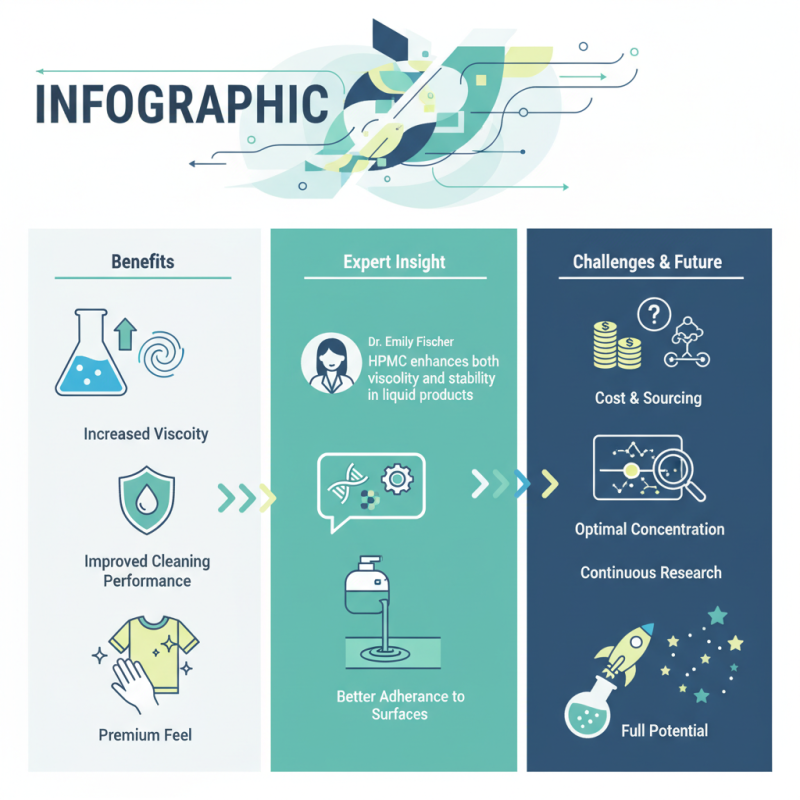
In the evolving landscape of liquid detergents, "HPMC for Liquid Detergents" has emerged as a game-changer. Dr. Emily Fischer, a leading expert in detergent formulation, states, “HPMC enhances both viscosity and stability in liquid products.” This highlights its critical role in improving the overall quality of detergents.
The incorporation of HPMC not only boosts the thickness of the liquid but also contributes to better performance. Consumers often seek products that clean effectively and feel premium. HPMC addresses both of these requirements by ensuring that the detergent adheres better to surfaces. As a result, users experience improved cleaning results and satisfaction.
However, there are challenges in using HPMC for various formulations. Some manufacturers struggle with cost and sourcing. Additionally, understanding the optimal concentration can be tricky. These issues prompt a need for continuous research. The benefits of "HPMC for Liquid Detergents" are clear, yet the industry must navigate these complexities to fully leverage its potential.
Understanding HPMC: A Key Ingredient in Liquid Detergents
HPMC, or Hydroxypropyl Methylcellulose, plays a crucial role in liquid detergents. This multifunctional ingredient enhances product performance. It acts as a thickener, improving the texture and helping the product adhere to surfaces. A well-formulated liquid detergent can clean more effectively. However, the choice of HPMC grade can impact the detergent's final properties.
One benefit of HPMC is its ability to stabilize formulations. It keeps ingredients well blended, preventing separation over time. This stability is vital for maintaining efficacy. In the formulation process, understanding the exact requirements of the liquid detergent can be challenging. Sometimes, achieving the right viscosity can take multiple trials.
HPMC also offers good bio-compatibility. This makes it safer for users and the environment. However, not all customers are aware of its advantages. Educating consumers is essential for maximizing usage. The balance of performance and sustainability may require further exploration. Industries must continue to innovate with HPMC to meet changing demands.
The Advantages of Using HPMC in Liquid Detergent Formulations
Hydroxypropyl Methylcellulose (HPMC) is gaining attention in liquid detergent formulations. Its role as a thickening agent cannot be overlooked. HPMC improves the viscosity and texture of detergents, resulting in better performance during use. When applied, liquid detergents feel richer and more concentrated.
One notable advantage of HPMC is its solubility in cold water. This helps in maintaining effectiveness in various water temperatures, leading to a more versatile product. HPMC also enhances stability, allowing detergents to withstand variations in pH and temperature, which is vital for long shelf life. However, sourcing quality HPMC can be challenging as not all suppliers offer consistent grades.
Another benefit is its biodegradable nature. This aspect appeals to environmentally-conscious consumers, contributing to reducing the environmental impact of liquid detergents. However, balancing formulation costs can be a struggle. Manufacturers must consider the cost versus benefits. It's a continuous learning process to optimize formulations while meeting consumer expectations.
Applications of HPMC in Household and Industrial Liquid Detergents
Hydroxypropyl Methylcellulose (HPMC) plays a vital role in both household and industrial liquid detergents. Its unique properties allow it to function as a thickener, stabilizer, and film-forming agent. In household detergents, HPMC enhances viscosity, improving the product's application and effectiveness. It can increase cleaning efficiency, as thicker solutions tend to cling longer to surfaces, allowing for better soil removal.
In industrial applications, HPMC serves a crucial role in formulating high-performance detergents. According to a report by Smithers, the global market for liquid detergents is projected to reach $30 billion by 2025. HPMC contributes to this growth by providing a stable formulation that remains effective across various temperatures and conditions. Manufacturers use it to create concentrate formulas, reducing shipping costs and storage space. However, the reliance on HPMC may also lead to challenges. Not all consumers understand its benefits, and some may have concerns about synthetic additives.
The importance of HPMC in detergent applications extends beyond efficacy. It also influences sustainability measures. By optimizing the use of HPMC, companies can minimize waste while ensuring powerful cleaning action. While many benefits exist, there are ongoing discussions regarding biodegradable options and reducing reliance on synthetic materials. The quest for balance in performance and environmental impact continues to evolve in the industry.
HPMC for Liquid Detergents Benefits and Applications Explained
| Application | Benefits | Concentration (%) | Viscosity (cP) | pH Stability |
| Household Liquid Detergents | Improves cleaning effectiveness and reduces surface tension | 1.0 - 2.0 | 500 - 1500 | 4.0 - 9.0 |
| Industrial Liquid Detergents | Enhances thickening and stabilizes formulations | 0.5 - 3.0 | 200 - 1000 | 4.0 - 10.0 |
| Laundry Detergents for Sensitive Skin | Gentle on skin while maintaining cleaning performance | 0.8 - 2.5 | 400 - 1200 | 5.0 - 9.5 |
| Concentrated Liquid Cleaners | Provides viscosity control and dilution stability | 1.5 - 3.5 | 600 - 2000 | 4.5 - 9.0 |
Comparative Analysis: HPMC vs. Other Thickening Agents in Detergents
HPMC, or Hydroxypropyl Methylcellulose, has gained prominence in the formulation of liquid detergents. Its thickening ability helps in achieving the desired viscosity. However, comparing HPMC with other thickening agents reveals interesting insights. For instance, while HPMC is effective, other agents like Xanthan gum and Carbopol have their unique benefits.
Xanthan gum is a natural thickener. It performs well in varying temperatures and pH levels. This makes it versatile for formulators looking for stability. On the other hand, Carbopol provides excellent clarity and stability but may require neutralization. These differences highlight that while HPMC is reliable, other options are worth considering.
Formulators must reflect on their choices. HPMC may be cost-effective, but does it provide the ideal performance for all applications? Flexibility is key. Detergents often face challenges, like dirt and grease removal. Choosing the right thickener can influence efficacy. It's crucial to weigh the pros and cons. The right agent could make a significant difference in product quality.
Environmental Impact and Safety Considerations of HPMC in Detergents
HPMC, or Hydroxypropyl Methylcellulose, is widely used in liquid detergents. Its benefits are clear, but its environmental impact is worth exploring. While HPMC is derived from natural cellulose, its production can still have implications for sustainability. This compound may not fully biodegrade, raising concerns about pollution.
Another point of concern is safety. HPMC is generally considered safe for use in consumer products. However, the potential for skin irritation exists. More research is needed to ensure its long-term safety. Consumers often overlook ingredient safety in favor of cleaning efficiency, but awareness is crucial.
When considering HPMC’s applications, manufacturers must also reflect on their choices. It offers viscosity and stability, enhancing product performance. Yet, this comes with responsibilities. Balancing efficacy and environmental sustainment requires ongoing evaluation. We should ask ourselves: are we making the best choices for both consumers and the planet?