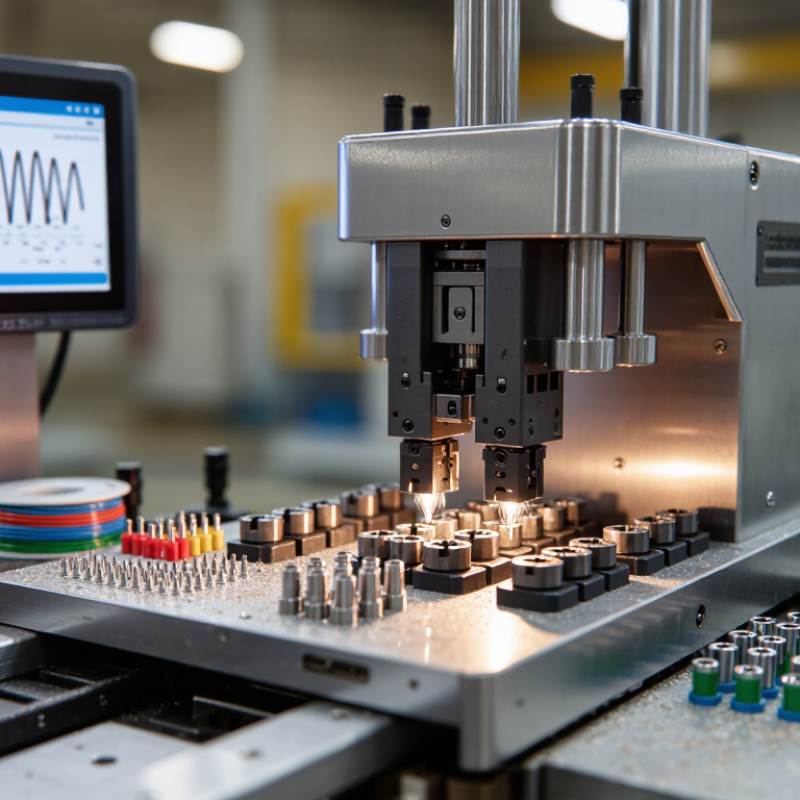
| 1 | Assess Build Quality | Frame material, platen alignment, tooling hardness, moving-part rigidity, and enclosure protection. | A rigid steel frame, accurately guided platen, replaceable wear parts, and guarding around pinch points are preferable for repeated production use. | Request frame drawings, tooling material details, safety-guard information, and photos of the internal mechanism. | Higher purchase price can reduce alignment problems, premature wear, and unplanned downtime. |
| 2 | Match Capacity to the Cable | Compatible conductor cross-section, terminal range, crimping force, die size, and allowable cable insulation diameter. | Select a machine whose rated range covers the smallest and largest terminals used in production, without operating continuously at its limit. | Verify conductor material, terminal geometry, die availability, sample-crimp results, and applicable wire-processing standards. | Correct sizing lowers scrap, tooling changes, rejected connections, and the need to purchase a second machine. |
| 3 | Compare Digital Controls | Display readability, force or position adjustment, password protection, recipe storage, cycle counter, alarms, and data output. | A clear digital interface with repeatable settings, fault messages, and stored recipes is more useful than a display that only shows a basic cycle value. | Check language options, metric/imperial settings, user-access levels, calibration records, and whether settings can be backed up. | Better controls improve setup consistency and traceability, potentially reducing operator error and rework. |
| 4 | Check Electrical Compatibility | Rated voltage, frequency, phase, plug type, power consumption, grounding requirements, and protection against voltage variation. | Machines should be ordered for the destination supply, such as 100–120 V or 220–240 V systems and the local 50/60 Hz frequency, where applicable. | Confirm the nameplate, wiring diagram, plug configuration, required circuit protection, import documentation, and local electrical compliance. | Correct specification avoids transformer costs, installation delays, electrical damage, and warranty disputes. |
| 5 | Evaluate Maintenance Needs | Lubrication points, cleaning frequency, calibration interval, wear-part replacement, fault diagnosis, and service access. | Prefer tool-free or clearly documented access to dies, sensors, guards, and routine cleaning areas; follow the supplier's service schedule. | Request a maintenance manual, spare-parts list, recommended lubricants, calibration procedure, and remote-support response time. | Simple maintenance reduces labor hours and the risk of extended downtime caused by unavailable technicians. |
| 6 | Verify Safety and Quality Control | Two-hand or guarded operation, emergency stop, overload protection, crimp-height control, inspection method, and documentation. | The machine should prevent or limit unsafe access to the crimping zone and support consistent inspection using approved gauges or test procedures. | Ask for risk-assessment documents, conformity declarations where required, factory test records, and sample crimp pull-test results. | Strong safety and quality controls can reduce accidents, product returns, liability exposure, and inspection costs. |
| 7 | Calculate Total Cost of Ownership | Purchase price, tooling, freight, duties, installation, training, electricity, spare parts, labor, downtime, and resale value. | Compare the five-year cost rather than the machine price alone: purchase and logistics + operating cost + maintenance + expected downtime. | Obtain a delivered-cost quotation, warranty terms, spare-part lead times, training inclusions, and estimated annual service requirements. | The lowest initial price may cost more if it requires frequent tooling replacement, specialist service, or longer downtime. |