7 Best Protective Coatings for Cars for Global Buyers
Choosing a protective coating for cars is not just a matter of chasing the glossiest finish. Buyers need protection that suits their vehicle, climate, budget, and maintenance habits. A ceramic coating may resist chemical stains and make washing easier, while paint protection film can help absorb impacts from road debris. Waxes and sealants cost less, but usually need more frequent renewal. The differences matter.
Detailing educator Mike Phillips is often associated with a practical reminder: “The best wax is the one you use.” That principle applies more broadly: even advanced coatings need careful application and sensible upkeep. A coating cannot repair existing paint damage, and its results depend on surface preparation, product quality, and installation. Small details count. A dusty panel or missed edge can undermine an otherwise careful job.
This guide compares seven options for global buyers, including ceramic coatings, paint protection films, spray sealants, and hybrid products. It considers durability, ease of application, finish, upkeep, and value—not just marketing claims. Product availability and performance can vary by region, so buyers should check local support and follow each manufacturer’s instructions. There is no perfect coating for every car. Some trade convenience for longevity; others demand more preparation than owners expect. That deserves a second look. The goal is to help readers choose protection that fits real driving conditions, from hot, sunlit commutes to wet roads and gravelly routes, without treating any single product as a universal solution.
How Car Paint Protection Works: OEM Finishes Often Measure 100–150 μm
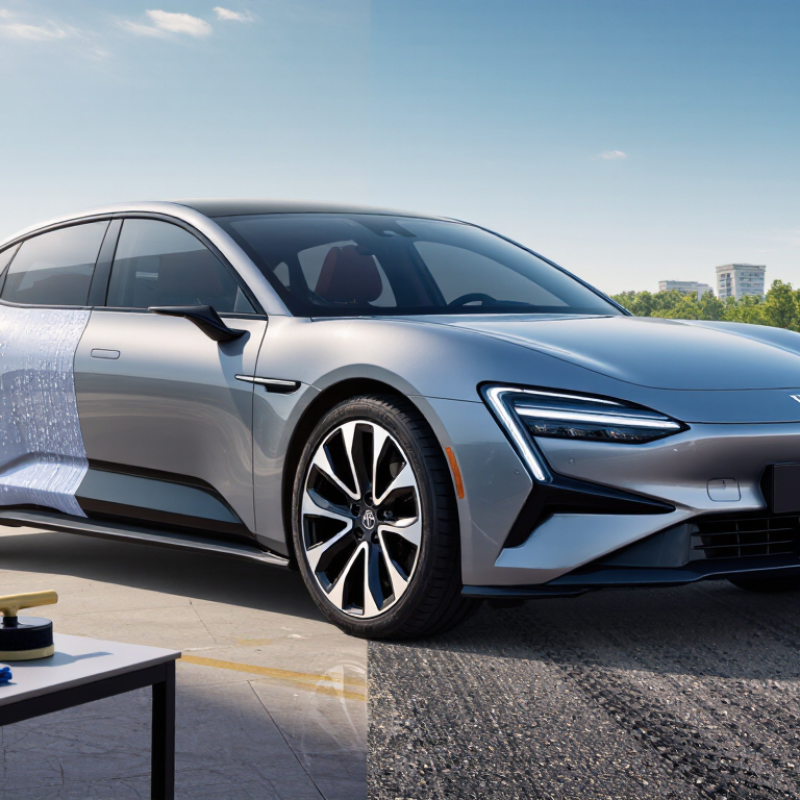
OEM automotive finishes often measure about 100–150 μm in total. That is roughly the thickness of a sheet of paper. The figure usually includes primer, color coat, and clear coat, not just the visible surface. Actual readings vary by vehicle, panel, and production process. Treat the range as a useful benchmark, not a factory specification. ISO 2808:2019 describes methods for determining coating thickness, while ASTM D7091-22 covers nondestructive dry-film measurements. These methods matter because a paint gauge reports thickness, but does not always identify each layer.
Protection works by adding a barrier between the finish and everyday exposure. Wax and sealants sit on the surface; ceramic-type coatings form a thin bonded layer, while paint-protection films provide a thicker physical shield. None makes scratched or poorly prepared paint new again. A coating may help water and dirt release more easily, but durability depends on preparation, application, climate, and maintenance. Small details count: road grit, harsh washing, and bird droppings can still mark exposed paint. That is easy to overlook. Before choosing protection, buyers should ask how the surface was measured and whether the product’s stated thickness refers to a cured film or the full protective system.
7 Best Protective Coatings for Cars for Global Buyers - How Car Paint Protection Works: OEM Finishes Often Measure 100–150 μm
| Protection type |
How it works |
Typical service life* |
Best suited for |
Key limitations |
| Carnauba wax |
Leaves a thin, sacrificial layer that adds gloss and helps water bead on the paint. |
About 1–3 months |
Owners seeking an affordable, easy-to-refresh finish. |
Wears away relatively quickly and offers little resistance to stone chips or scratches. |
| Synthetic paint sealant |
Polymer ingredients bond to the clear coat to provide gloss and a water-repellent surface. |
About 3–6 months |
Regularly driven vehicles needing low-cost, periodic protection. |
Does not prevent impact damage; durability varies with washing and weather exposure. |
| SiO₂ ceramic coating |
A cured, silica-based coating forms a thin surface layer that improves water repellency and resistance to some contaminants. |
Typically 1–3 years, depending on preparation, use, and care |
Drivers wanting easier cleaning and longer-lasting gloss than wax or sealant. |
Not scratch-proof or chip-proof; proper paint preparation and application are important. |
| Professional ceramic coating |
A professionally applied coating is installed over prepared paint; some systems use multiple layers or a dedicated top coat. |
Often 2–5 years, subject to inspection and maintenance requirements |
Owners seeking a professionally prepared finish and a longer maintenance interval. |
Higher installation cost; performance depends on application quality and does not replace physical impact protection. |
| Graphene-enhanced coating |
A coating marketed with graphene-related additives; its base protection is generally provided by the coating binder and formulation. |
Varies by formulation; commonly marketed for multi-year use |
Buyers comparing newer coating formulations and willing to verify independent test data. |
Claims and durability are not standardized; the word “graphene” alone does not establish superior protection. |
| Clear TPU paint protection film (PPF) |
A transparent thermoplastic polyurethane film physically shields painted panels from many small stone impacts and abrasion. |
Often about 5–10 years, depending on film, climate, installation, and care |
High-impact areas such as the front bumper, hood, mirrors, and door edges. |
Costlier than liquid coatings; edges, seams, and film condition need periodic inspection. |
| Colored protective film / vinyl wrap |
A sheet film covers the paint, changing its appearance and providing a removable barrier against light surface wear and environmental exposure. |
Typically 3–7 years; highly dependent on film type and exposure |
Drivers seeking a color change with some surface coverage. |
Not all wraps provide the impact protection of dedicated PPF; removal and paint condition require care. |
*Service-life figures are approximate and vary by product formulation, paint preparation, installation, climate, washing habits, and exposure. Original-equipment automotive paint systems often measure roughly 100–150 μm in total, but thickness varies by vehicle and measurement location. Liquid coatings add a comparatively thin layer; they do not provide the impact protection of paint protection film. No coating makes paint completely scratch-proof.
The Seven Options: Wax, Sealants, Ceramic, Graphene, PPF, Vinyl, and Hybrids
For global buyers, climate and driving conditions matter more than coating hype. Wax gives a warm gloss and simple upkeep, but often needs frequent renewal under strong sun or heavy rain. Paint sealants generally last longer and suit owners seeking easier washing without a thick film. Ceramic coatings can resist chemical staining and make dirt easier to remove; they do not stop stone chips. Graphene products vary widely. Check independent test methods, not just the label.
No coating is magic. S&P Global Mobility reported that the average U.S. light vehicle age reached 12.6 years in 2024, making long-term paint care relevant to many owners. Paint protection film (PPF) provides a physical barrier against road debris on exposed areas, such as the hood edge and mirror caps. Vinyl wraps mainly change appearance and offer limited protection; they are not equivalent to impact-rated PPF. Hybrid systems combine layers, such as film on high-impact panels and a coating elsewhere, but installation quality matters. The 2023 Global Automotive Color Popularity Report put white at 34% of new-car colors worldwide, a reminder that owners may want protection without changing the finish. Still, upkeep is easy to underestimate. Check the product’s care instructions and local climate before choosing.
Typical Service-Life Ranges of Seven Car Protection Options
Indicative duration in months; bars show commonly cited low-to-high ranges.
These are indicative ranges, not results from a standardized head-to-head test. Actual durability depends on the product, preparation, climate, use, and maintenance. Protection types are not interchangeable: paint protection film (PPF) provides physical impact protection, while vinyl is primarily for changing appearance.
PPF vs. Liquid Coatings: Typical Films Measure 6–8 mil (150–200 μm)
Paint protection film and liquid coatings do different jobs, even when sellers place them side by side. Typical paint protection film measures about 6–8 mil, or 150–200 μm, though specifications vary by product and measurement method. That thickness gives the film a physical layer that can help absorb small stone impacts and reduce light scratching. It is not armor. A sharp, fast impact can still damage the paint beneath it.
Liquid coatings, including ceramic-style coatings, are much thinner after curing. They can make washing easier and help repel water and grime, but they generally do not provide the same impact barrier as film. Think of rain beading on a hood, not a pebble bouncing off it. A useful comparison is a clear film over a phone screen versus a slick surface treatment. Neither option prevents every kind of damage.
Installation matters as much as the stated thickness. Dust trapped under film may show as a tiny speck, while poorly wrapped edges can collect dirt over time. Ask for the film’s measured thickness, coverage map, and care instructions, especially if the car will face gravel roads or strong sun. Climate changes the trade-off. In humid regions, frequent washing may matter more; on rough roads, front-end film may be worth considering. I would not choose by thickness alone. Some specifications look precise, but they do not tell the whole story.
How to Assess Durability: ASTM D3359 Adhesion and ISO 9227 Salt-Spray Tests
For global buyers comparing protective coatings, durability claims need a repeatable test, not just a glossy panel. ASTM D3359 measures coating adhesion using a controlled cut and tape removal. Its 0A–5A or 0B–5B scale depends on the test method; higher ratings indicate less coating removal. On a vehicle panel, a strong result matters around stone chips, door edges, and seams, where water can creep beneath a weak film. Still, a laboratory score is not a guarantee. Surface preparation, coating thickness, cure time, and the panel’s condition can change the outcome.
Salt exposure adds another useful check. ISO 9227 specifies salt-spray testing, including neutral salt spray, under controlled conditions. Inspectors assess corrosion, blistering, or coating damage after exposure, often near deliberate scratches. Longer exposure can reveal weaknesses. It does not predict service life directly. ASTM International’s D3359 standard and ISO’s 9227 test method define procedures, but neither turns hours in a chamber into years on the road. That distinction is easy to overlook.
The stakes are substantial: the AMPP-sponsored IMPACT study estimated corrosion costs at US$2.5 trillion globally, or 3.4% of global GDP, using 2013 data. That figure covers many industries, not cars alone. For practical comparisons, request the test method, exposure duration, adhesion rating, and post-test inspection criteria. Ask whether results came from coated production panels or ideal laboratory coupons. A neat report helps. Real-world edges can still disappoint.
Choosing for Global Conditions: Climate, Local VOC Rules, Installation, and Care
For global buyers, climate matters as much as coating chemistry. ISO 9223 classifies atmospheric corrosion by factors including humidity, airborne salts, and pollution; coastal exposure can therefore demand different protection from a dry inland commute. NOAA’s 1991–2020 Climate Normals provide location-specific temperature and precipitation records, useful for planning application and cure conditions. A hot metal panel in direct sun is a poor surface to coat. So is a damp garage floor.
VOC rules vary by market and product category. In the European Union, Directive 2004/42/EC sets category-specific limits; its ready-to-use vehicle-refinishing topcoat category is capped at 420 grams per liter. That figure is not a universal allowance, and it does not automatically apply to every protective coating. Check the current local requirements and the product’s technical data sheet before purchase. Ask the installer how ventilation, temperature, and humidity affect curing—not just how glossy the finish looks.
Installation quality can outweigh a coating’s advertised lifespan. Paint should be clean, dry, and free of wax or salt; seams, badges, and tight panel edges need careful coverage. Keep the vehicle out of rain and washing until the specified cure period ends. Later, rinse away road salt and inspect stone chips before corrosion creeps underneath. Results can still vary. Even careful preparation is not perfectly repeatable, which is worth admitting when comparing warranties.