What is the Best Protective Coating for Cars?
Choosing the right protective coating for cars can be challenging. With numerous options available, car owners often feel overwhelmed. A good protective coating for cars not only enhances appearance but also safeguards against environmental damage.
Many coatings promise durability and shine, but not all live up to expectations. It is crucial to consider various factors, such as ease of application and longevity. Some coatings require professional installation, which can increase costs.
Reflecting on personal experiences, many drivers have found their choices lacking. It’s essential to research thoroughly before making a decision. Ultimately, a reliable protective coating for cars can make a significant difference. A wrong choice can lead to dissatisfaction.
Types of Protective Coatings Available for Cars
When it comes to protecting your car's paint, various coatings are available. Each type offers unique benefits and drawbacks. Understanding these options helps you make an informed choice.
**Wax** is one of the simplest and most traditional forms of protection. It enhances shine and provides a decent barrier against UV rays. However, it wears off quickly and requires frequent reapplication.
**Sealants** are a step up. They last longer than wax, often up to six months. They create a strong bond with the paint. Unfortunately, they're not as glossy and may not be as forgiving on minor imperfections.
**Ceramic coatings** have gained popularity for their durability. They provide a thick barrier against harsh elements. Yet, the application can be complex and may require professional help. Plus, they can be expensive.
**Tips:** Regardless of your choice, preparation is vital. Always wash and dry your car thoroughly before applying any coating. Ensure the surface is free from scratches and dirt. It's worth investing time into proper preparation.
Lastly, remember that no coating is perfect. They all need maintenance and care. Be sure to inspect your car often. Look for fading or wear. Adjust your protective strategy as needed.
Factors to Consider When Choosing a Car Coating
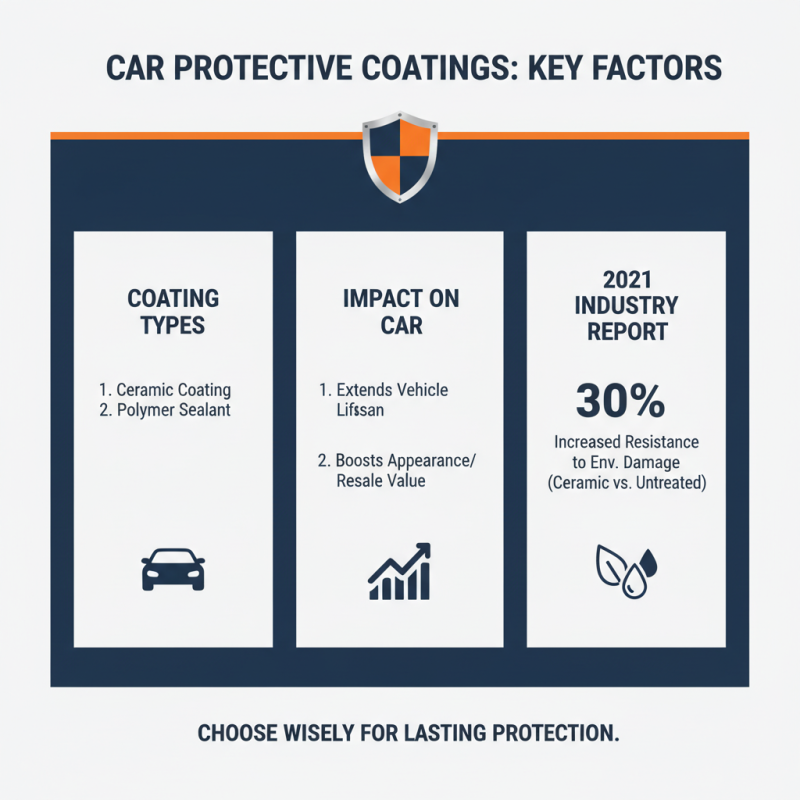
Choosing the right protective coating for cars involves several important factors. The type of coating can significantly impact a vehicle's lifespan and appearance. According to a 2021 industry report, cars with high-quality ceramic coatings showed a 30% increase in resistance to environmental damage compared to untreated surfaces.
Durability is one key consideration. A study by the Automotive Coating Association highlighted that stronger coatings can withstand extreme weather conditions better. Many coatings promise long-lasting protection, but some fail to deliver over time. Additionally, the application process matters. Improper installation can lead to peeling or bubbling, which might create more problems.
Cost is another critical factor. Higher price tags do not always guarantee better protection. A budget-friendly option might actually perform well if it’s applied correctly. Potential buyers should also consider how easy it is to maintain the coating. Some coatings require more frequent reapplication, while others are more forgiving. Addressing these elements can influence the decision. A thoughtful approach ensures better choices in protective coatings for any vehicle.
Application Methods for Car Protective Coatings
When considering protective coatings for cars, application methods play a crucial role. Most methods fall into two categories: manual and automated. Manual application generally involves hand spraying or using a roller. This method allows for detailed work but can lead to inconsistencies. According to a report by the Automotive Coatings Market Research, over 58% of professionals prefer manual application for intricate designs or repair work.
On the other hand, automated methods, such as robotic spraying, ensure uniformity and efficiency. In fact, studies show that automated applications can reduce coating waste by up to 30%. However, these systems require significant investment. Smaller workshops often struggle to justify the cost. Inconsistent training among staff may also lead to varying results with either method.
Choosing the right application method often hinges on the specific coating used. Some coatings need precise control over thickness to perform effectively. For instance, ceramic coatings demand a careful application to bond correctly. This emphasis on precision indicates a learning curve that many new technicians face. An experienced hand can make a substantial difference in the coating's longevity and performance.
Comparing Durability and Longevity of Different Coatings
When choosing a protective coating for cars, durability and longevity are key factors. Some coatings offer a hard, glass-like finish. These can withstand scratches better than traditional paints. However, the level of protection can vary based on the environment. Harsh weather, UV rays, and road debris can degrade any coating over time.
Ceramic coatings are popular for their durability. They can last several years with proper maintenance. Yet, they may not always bond well with all paint types. Similarly, wax-based coatings provide a temporary shield. They are easier to apply but need frequent reapplication. This approach can be time-consuming.
It’s sometimes challenging to find the perfect coating. While some provide excellent protection, the application process can be tricky. Users may face difficulties achieving an even coat. Rushed applications can lead to uneven surfaces. Reflecting on these aspects is crucial for anyone considering a protective finish. Ultimately, understanding the trade-offs is essential for long-term satisfaction.
Cost Analysis of Various Automotive Coating Options
Cost is a significant factor when considering automotive coatings. There are various options available, each with different prices. A basic wax coating may only cost a few dollars but provides minimal protection. Its longevity is also limited. More advanced options, like sealants, range from $50 to $150. These offer better durability but require more effort in application.
Ceramic coatings are gaining popularity due to their strength and longevity. However, they can be quite expensive, often ranging from $500 to over $1,500. This investment can be daunting. You might wonder if the price justifies the performance you receive.
DIY coatings can be a workaround. They are more affordable but come with a learning curve. Mistakes can lead to uneven finishes or subpar protection. Therefore, potential savings may not always equate to a good result. Understanding these costs is vital when choosing the best protective coating for your car.
Cost Analysis of Various Automotive Coating Options
This chart illustrates the estimated cost per square foot of various automotive coating options, providing insights into the best protective coating choices for cars.