10 Best Paper Takeaway Containers for Food Businesses

A takeaway container earns its place during the journey from kitchen pass to customer’s table. Paper Takeaway Containers must hold their shape, protect food, and suit the way each business serves. A crisp pastry needs a different pack from saucy noodles. Steam, oil, stacking, and delivery time all matter. The right choice can keep a meal presentable. The wrong one may leave a soggy base or a loose lid.

For this guide, packaging specialist Jordan Lee’s illustrative rule of thumb is: “Choose the container for the food’s journey, not just its shelf appeal.” This is an editorial quote, not a sourced statement. It points to practical checks buyers can make: test a filled container, press the lid closed, and see how it handles a short delivery ride. Small trials reveal details a product photo cannot.

The 10 options ahead cover different menus, service styles, and budget needs. Some prioritize sturdy construction; others offer convenient compartments or a clean presentation. No single container suits every dish. And “paper” alone does not explain performance. Material layers, coatings, dimensions, and closure design can change how a package works. Businesses should confirm product specifications with suppliers and test containers with their own food. That takes time. It can also prevent avoidable surprises at the counter.
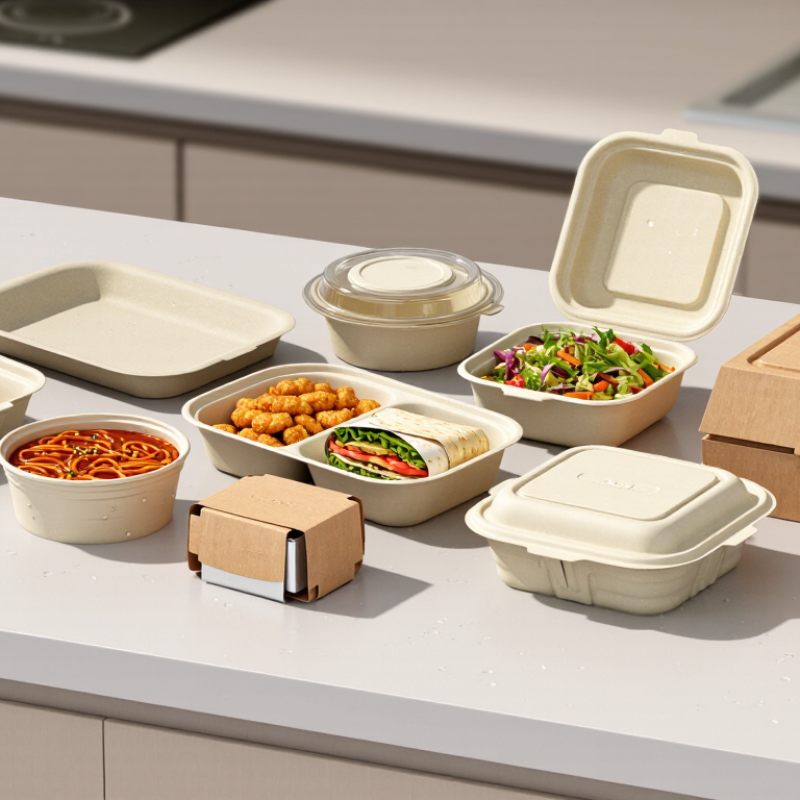
10 Best Paper Takeaway Containers for Food Businesses

Paper Takeaway Containers: Materials, Designs, and Food-Service Uses

Paper takeaway containers vary by fiber, coating, and construction. Kraft paperboard has a natural look and suits sandwiches, pastries, and dry sides. For oily noodles or sauced meals, an uncoated box may soften or leak during a long delivery. That detail matters. Some containers use a barrier layer to resist moisture and grease, but it can affect recycling options. Check supplier documentation and local waste guidance rather than relying on a broad “eco-friendly” claim.

Molded-fiber trays hold firm foods such as rice bowls, cut fruit, or baked items. Folded paperboard cartons are lightweight and easy to stack, while clamshell styles keep a meal together during handoff. Lids need a close fit, but a fully sealed container can trap steam and soften crisp food. Small vents help. They are not a cure-all; fried foods may still lose their crunch on the way to the customer.

Choose a size that limits empty space without pressing food against the lid. A container that looks sturdy on a counter may behave differently with hot broth or heavy portions. It is easy to overvalue appearance and overlook the messy part: sauce at the corners, condensation under the lid, and a box held at an angle. Test the actual menu and delivery time before ordering in volume.

Key Criteria for Evaluating Paper Takeaway Containers

A useful evaluation starts with the actual menu, not the catalog photo. Place a hot curry, a crisp salad, and a sauced sandwich in separate containers. Check whether seams soften, lids stay secure, and moisture reaches the outside after a short delivery-style hold. Check the corners. A container that handles dry pastries may fail with oily or steaming food.

Heat and ventilation matter. Tight lids help prevent spills, but trapped steam can turn fried food limp. Look for vents that release moisture without leaving an easy path for leaks. Compare several sizes against real serving portions; excessive empty space can let food slide, while an overfilled box may buckle. Fit matters.

Stack a full batch on a service counter and check whether the base bends or the lids pop loose. Also consider how quickly staff can fold, fill, and close each unit during a busy shift. Ask suppliers for clear material and food-contact information, and verify environmental claims rather than relying on vague labels. No single design wins every test. That is easy to forget. A small in-house trial may reveal issues that a polished sample does not.

10 Best Paper Takeaway Containers for Food Businesses

Key selection criterion: match container capacity to typical portion sizes.

Metric values are conversions using 1 US fl oz = 29.5735 mL, rounded to the nearest milliliter. These are illustrative nominal capacity options; usable capacity varies by container design. Check product specifications and allow room for the food and lid.

Ten Paper Container Options for Food Businesses

Ten paper container options can cover very different service needs. Folding cartons suit sandwiches and dry meals; molded-fiber clamshells hold hot entrees. Paper bowls work for salads, while lined soup cups handle broth. Grease-resistant wraps keep pastries and burgers tidier. Paperboard deli tubs suit sides, bakery boxes protect cakes, and meal trays separate components. Lunch boxes carry mixed meals; corrugated pizza boxes protect flat, hot food. Fit matters most. A loose lid can undo careful packing.

Material claims need checking. The U.S. Environmental Protection Agency’s Advancing Sustainable Materials Management: 2018 Fact Sheet reports a 68.2% recycling rate for paper and paperboard. That national figure does not mean every coated or food-soiled container is accepted locally. Ask your waste hauler about coatings, residue, and sorting rules. Also test containers with actual menu items: a crisp fried snack may soften during a long delivery, even in sturdy packaging. No format is perfect.

Tips: Match the container to food temperature, moisture, and travel time. Test lids with a real portion, then check for leaks after a typical delivery route.

Matching Container Styles to Menu Items and Service Needs

A good paper takeaway container should protect the meal, not just hold it. The National Restaurant Association’s 2024 State of the Restaurant Industry report found that 47% of U.S. adults order takeout at least once a week. That makes packaging part of the dining experience. Match the shape to the food: use a shallow, compartmented tray for crisp sides and sauced mains, while a deeper paper bowl suits grain bowls and salads. For sandwiches, a snug wrap or low-profile carton limits movement without crushing the bread.

Moisture changes the choice. A hot, saucy dish needs a leak-resistant lining and a secure lid; fried foods need room for steam to escape, or the crust can soften before it reaches the customer. Small details matter. Test containers with the actual portion, sauce, and travel time—not an empty sample on a counter. Paper containers vary in stiffness and barrier performance, so “paper” alone does not predict how they will hold up.

Service style matters, too. A stackable, easy-to-close carton helps busy pickup lines, while a handled soup cup is easier to carry with one hand. Check whether the container fits your bag and keeps its shape during delivery. Compostable claims also need care: acceptance depends on local processing facilities, and many paper packages include coatings. I’d verify disposal guidance before printing it. That step is easy to overlook.

10 Best Paper Takeaway Containers for Food Businesses - Matching Container Styles to Menu Items and Service Needs

Container Style Common Material Best-Matched Menu Items Service Strengths Important Considerations
Folded Paperboard Clamshell Coated or uncoated paperboard Burgers, sandwiches, fries, and other handheld meals One-piece design closes quickly and is convenient for counter service and takeaway. Ventilation helps limit trapped steam; check coating and grease resistance for oily foods.
Paper Soup Cup with Lid Paperboard with a moisture-resistant lining; paper or compatible plastic lid Soup, chili, oatmeal, and other hot liquids Tall shape is easy to carry and fits well in many drink carriers and takeaway bags. Use a secure, compatible lid and leave headspace; confirm the product is rated for hot liquids.
Rectangular Paperboard Meal Tray Food-grade paperboard, often with a grease-resistant treatment Rice bowls, pasta, noodles, and mixed hot meals Open-top format makes food easy to access and works well for quick-service meals. Not all trays are leakproof; choose a lined option for moist or saucy dishes.
Paperboard Food Box with Hinged Lid Folded paperboard, sometimes with a moisture-resistant lining Stir-fries, salads, noodles, and combination meals Integrated lid reduces the need for separate packaging parts and helps contain food during transport. Allow hot food to vent when appropriate, since trapped steam can soften some foods and packaging.
Paper Deli Box Paperboard with a grease-resistant interior or lining Sandwiches, pastries, sliced desserts, and deli portions Wide opening supports quick packing and makes items easy to display or retrieve. Choose a size that limits excess movement; a paper box alone may not prevent leaks from wet fillings.
Paperboard Pizza Box Corrugated or solid paperboard Pizza, flatbreads, and large baked items Broad, shallow format protects the shape of flat foods and provides space for stacking. Vents can release steam; keep boxes dry and avoid stacking beyond the supplier’s guidance.
Molded Fiber Bowl Molded plant-fiber pulp, commonly formed from recovered paper or other plant fibers Grain bowls, salads, sides, and meals with separate wet and dry components Rigid shape offers a comfortable handhold and can be paired with a fitted lid. Liquid and oil resistance vary by product; confirm the bowl’s intended use and local disposal options.
Paperboard Compartment Tray Folded paperboard, sometimes coated or lined Combination plates, lunch specials, and meals with sides Separate sections help keep foods apart during packing and short-distance transport. Compartments do not necessarily prevent liquid transfer; verify the tray’s leak resistance for sauces.
Paper Window Bakery Box Paperboard with a clear viewing window, often made from a separate film Cookies, cupcakes, pastries, and other baked goods Displays the product without opening the box and supports neat counter presentation. Window materials and recycling rules vary; avoid use for hot foods unless the package is rated for them.
Paper Snack Boat Folded paperboard, often with a grease-resistant treatment Fries, nachos, fried snacks, and small portions Open shape allows fast service and easy access at events, kiosks, and food counters. Best for immediate service; it offers limited protection from spills and is generally unsuitable for liquids.
Packaging performance depends on the specific product, food temperature, moisture, and supplier specifications. Check food-contact suitability, lid fit, and local recycling or composting requirements before ordering.

Purchasing, Storing, and Disposing of Paper Takeaway Containers

Choosing paper takeaway containers starts with the meal, not the shelf price. A shallow box suits fries, while a leak-resistant bowl handles saucy dishes better. Ask suppliers for food-contact documentation, grease resistance, and clear guidance on whether coatings affect local recycling. Test containers with real portions for 20 minutes; steam can soften lids and turn crisp food soggy. Small trials reveal more than a catalogue photo.

Store cartons sealed, dry, and off the floor. Keep them away from sinks, chemicals, and strong odors, and use older stock first. A damp corner can weaken a whole stack. It is easy to over-order during a busy season; unused cartons still take up space and may deteriorate before use. Set reorder levels from weekly usage, then review them when menus change.

Disposal depends on the container’s condition and local collection rules. The U.S. Environmental Protection Agency reported that paper and paperboard containers and packaging reached an 80.9% recycling rate in 2018. That figure is not a promise that every food-soiled box is recyclable. Scrape out leftovers, separate plastic lids where facilities require it, and check municipal guidance for coated or greasy paper. The FDA Food Code 2022 recommends holding cold food at 41°F or below and hot food at 135°F or above; packaging should support safe transport without being mistaken for temperature control. It cannot do that alone.