2026 Best Non Slip Coating Options for Safety and Durability?
In an ever-evolving world, safety must remain a priority. Non slip coatings are vital for preventing accidents in various environments. According to industry expert Dr. Emily Hayes, “The right non slip coating can significantly reduce the risk of slips and falls.” This statement highlights the essence of selecting the best options available.
Choosing the right non slip coating requires careful consideration. There are numerous products on the market, each with unique features. Some coatings are better for indoor surfaces, while others excel outdoors. Factors like durability, aesthetic appeal, and cost play essential roles in decision-making.
However, the reality is not always perfect. Some coatings wear out faster than expected. Others may not provide adequate grip as advertised. A well-informed choice is crucial. Users must weigh the pros and cons to find the safest solution. Investing in quality non slip coating can prevent injuries and enhance safety in daily life.
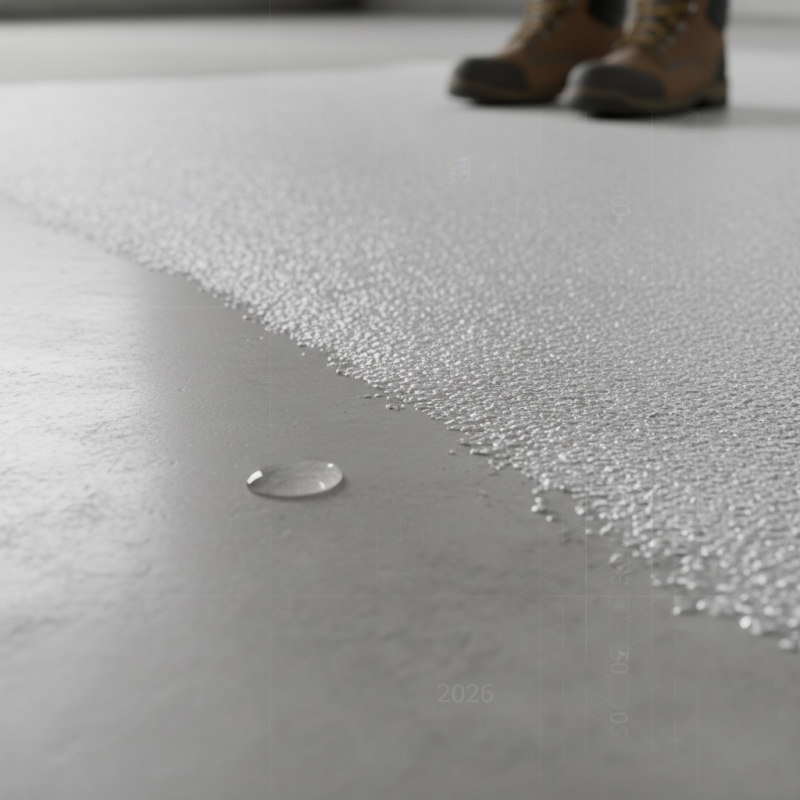
Top 2026 Non Slip Coating Materials: An Overview of Options
When it comes to non-slip coatings, various options provide safety and durability.
Epoxy coatings are widely used in commercial and residential spaces. They create a strong bond and can adhere to many surfaces. They offer good abrasion resistance but can sometimes become slippery when wet, requiring careful selection.
Another popular choice is polyurethane coatings. These are flexible and resistant to UV light. This flexibility allows them to withstand traffic stress without cracking. However, if not applied correctly, they may require frequent maintenance. Consider using rubberized or textured coatings for extra grip.
Natural materials like sand or silica can also enhance slip resistance. These additives are often mixed with coatings to improve traction.
They provide a rough surface but can wear down over time. This could lead to a need for reapplication or top-ups. Each option has distinct advantages and challenges, and the best choice varies based on specific needs and circumstances.
Understanding Non Slip Coating Types: Characteristics and Uses
Non-slip coatings play a crucial role in enhancing safety in various settings. They come in different types, each with distinct characteristics.
Epoxy-based coatings are popular due to their strong adhesion and durability. They bond well to many surfaces and resist wear.
On the other hand, polyurethane coatings, while less rigid, offer excellent flexibility and UV resistance. This makes them ideal for outdoor applications.
Another option is rubberized coatings that provide a softer grip, ideal for areas needing comfort underfoot.
When selecting a non-slip coating, consider the surface type. Rough surfaces usually require thicker coatings for better adhesion.
Smooth surfaces might need special primers to ensure effective application. The choice of coating also depends on the environment.
For example, areas exposed to water or harsh chemicals need coatings that resist these elements.
Tips: Always test a small area before complete application. This can help you identify any bonding issues.
Additionally, try to maintain surfaces regularly. Regular cleaning can prolong lifespan and effectiveness.
Overlooking routine maintenance could lead to safety hazards.
Key Factors to Consider When Choosing Non Slip Coatings
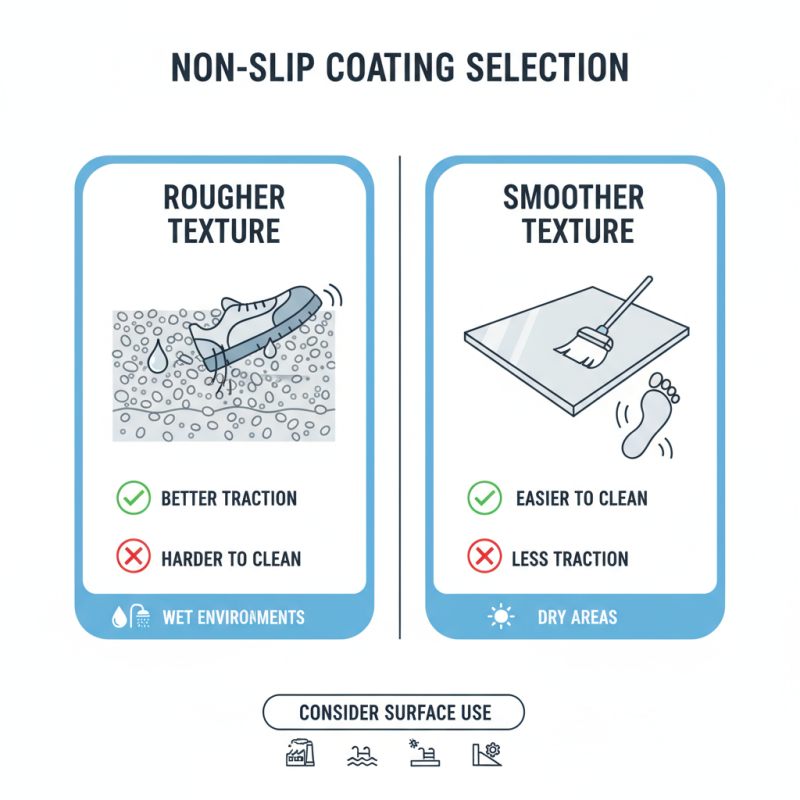
When selecting non-slip coatings, several key factors demand attention. One crucial aspect is the texture of the coating. A rougher surface often provides better traction. However, it may be harder to clean. Consider how the surface will be used. Wet environments may require different textures than dry areas.
Durability is another important factor. Some coatings can wear down quickly, especially in high-traffic areas. Assess the expected foot traffic in the area where the coating will be applied. Some inexpensive coatings might save money initially but require frequent replacements. This could lead to higher long-term costs.
Lastly, the application process matters. Some products are easy to apply, while others may require professional help. DIY coatings can be tricky, and a poorly done job can defeat the purpose. Think about your skills and the time you can commit. Choosing the right coating isn’t only about safety; it is also about practicality.
Application Methods for Non Slip Coatings: Step-by-Step Guide
Applying non-slip coatings can significantly enhance safety in various environments. Before beginning, ensure the surface is clean and dry. A pressure washer or scrub brush may help remove dirt and oily residues. If necessary, sand down rough areas. This prepares the substrate for an even application.
Next, choose the correct method for your coating. A paint roller is effective for large areas, while a brush can reach tight corners. Pour a suitable amount onto a tray. Dip the roller and start applying with even pressure. It’s essential to work in sections. Inconsistent coverage can lead to slippery spots. Sometimes, mistakes happen. Uneven application can result in aesthetic issues, so double-check each part.
Allow the coating to cure as per the manufacturer’s instructions. This step is crucial. Rushing may lead to dissatisfaction. Once cured, test the surface for slip resistance. If it feels slippery, consider a second layer. Reflect on the overall finish. A few imperfections might affect safety. Regular maintenance will also be necessary to sustain its effectiveness over time.
Maintenance Tips for Longevity of Non Slip Coatings
Maintaining non-slip coatings is crucial for ensuring safety and durability. Regular inspections can prevent deterioration. According to industry reports, over 70% of slip-related accidents happen in areas with poorly maintained surfaces. Small cracks or wear can significantly reduce traction.
Tips for maintenance include cleaning the surfaces regularly. Dirt and grime can wear down coatings. Use gentle detergents and avoid harsh chemicals. Make sure to remove any debris that can trap moisture. Moist environments weaken coatings faster.
Check for wear and tear every few months. Look for areas that show signs of damage. An early intervention can extend the life of non-slip coatings. Reapplication might be necessary every one to three years, depending on usage. This is not just a recommendation; it’s backed by studies showing that proactive maintenance improves safety by up to 50%.
2026 Best Non-Slip Coating Options for Safety and Durability
This chart represents the performance ratings of various non-slip coating options based on safety and durability. The data is measured on a scale of 1 to 10, with 10 being the highest rating.