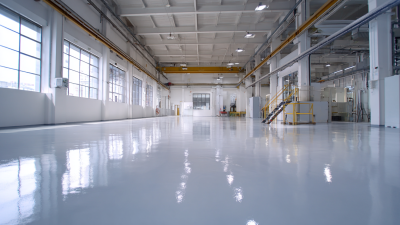
7 Best Epoxy Coating Types for Global Buyers?

Global buyers increasingly view epoxy coating as a performance decision, not merely a surface-finishing purchase. Grand View Research’s 2024 epoxy resin market analysis places the industry in the low-teens billions of U.S. dollars. It also identifies construction, transportation, and industrial equipment as important demand sectors. MarketsandMarkets’ protective coatings research similarly highlights corrosion control and infrastructure maintenance as major growth drivers. The numbers are impressive. Yet market forecasts cannot choose the right coating for every site.

A warehouse floor may need abrasion resistance from forklifts, while a coastal steel structure faces salt spray, humidity, and difficult maintenance access. Waterborne, solventborne, 100% solids, powder, novolac, zinc-rich, and ceramic-filled systems each solve different problems. Their results depend on substrate preparation, film thickness, temperature, moisture, and application skill. ISO 12944 and ASTM test methods offer useful comparison points, but laboratory performance does not always mirror a dusty jobsite.

This guide examines seven epoxy coating types for international purchasers. It compares durability, chemical resistance, curing behavior, VOC considerations, installation demands, and typical applications. Technical data sheets matter. So do safety data sheets, batch consistency, and supplier experience with export packaging. Some rankings remain debatable, especially when price competes with service life. A low-cost drum can become expensive after peeling, downtime, and reapplication. Buyers should therefore question broad claims and verify test conditions before ordering. The best choice is rarely universal. It is the one that fits the substrate, exposure, climate, regulations, and maintenance plan.
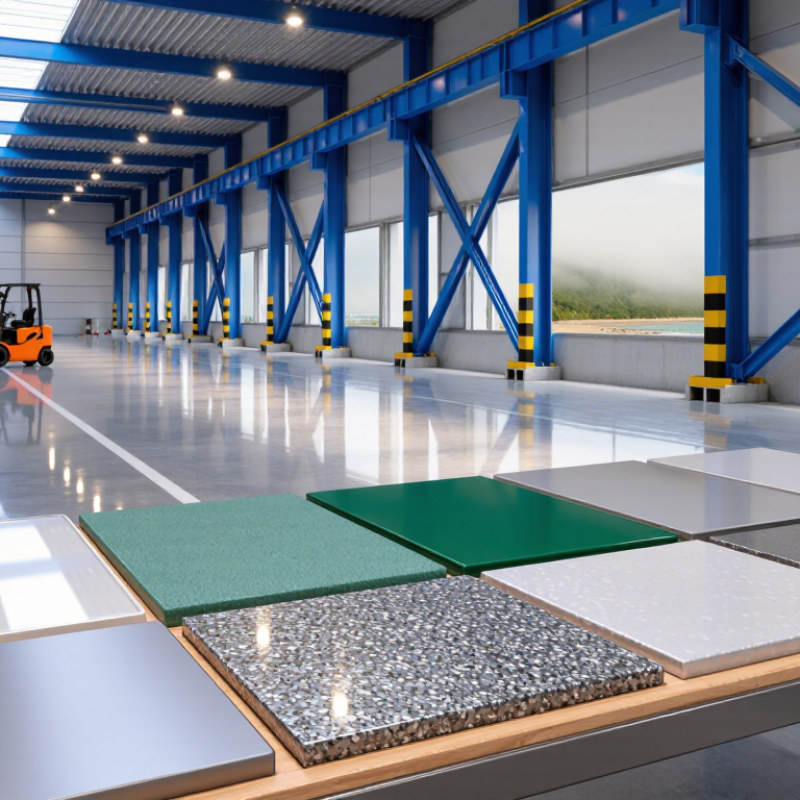
7 Best Epoxy Coating Types for Global Buyers?

Epoxy Coating Selection Criteria: ASTM D4060, D4541, and ISO 12944

For global buyers comparing seven epoxy coating types, performance evidence matters more than product labels. A 2024 Grand View Research assessment places the global epoxy resin market near US$12 billion, driven by construction, infrastructure, and protective applications. That growth increases specification pressure, but market size does not prove coating suitability. Field inspectors still find failures caused by poor surface preparation, incorrect film thickness, and rushed curing.

ASTM D4060 measures abrasion resistance through mass loss after controlled wheel testing. Lower loss usually indicates better wear resistance. However, buyers should request wheel type, load, cycles, and coating thickness. Without these details, two results cannot be compared fairly.

ASTM D4541 measures pull-off adhesion, reported in MPa or psi. The failure mode matters as much as the number. Cohesive failure inside the coating may suggest a different problem than adhesive failure at the steel interface. Test the surface, too.

ISO 12944 connects coating selection with corrosivity categories, including C2, C3, C4, C5, and CX. Its durability ranges are defined as low, medium, high, and very high, rather than guaranteed service lives. A high-durability rating is not a warranty. Salt spray results alone can mislead, especially for immersed or coastal structures. A project specification should combine exposure category, expected maintenance interval, D4060 wear data, and D4541 adhesion results.

One weakness remains: laboratory testing cannot fully reproduce site contamination, humidity, or application errors. Buyers should allow a technical review before approving the seven options.
Water-Based and Solvent-Based Epoxies: VOC Compliance Below 50 g/L

7 Best Epoxy Coating Types for Global Buyers

For global buyers, water-based and solvent-based epoxies deserve close attention. Water-based epoxy usually releases fewer solvents during application and suits warehouses, schools, and occupied facilities. However, low odor does not guarantee zero VOC. Check the technical data sheet and the tested VOC value. Solvent-based epoxy can provide strong flow, penetration, and chemical resistance. Modern formulas may stay below 50 g/L, but performance depends on resin, curing agent, and application conditions. Measure twice.

The seven common categories include water-based, solvent-based, 100% solids, high-solids, novolac, cycloaliphatic, and fast-cure epoxy coatings. For buyers comparing international projects, the 50 g/L target should be treated as a specification, not a marketing phrase. Ask for the test method, mixing ratio, density, and final VOC calculation. Local limits may differ by region and building use. A product compliant in one country may need additional review elsewhere.

Application experience also changes the result. Poor ventilation, excessive thinning, or incorrect mixing can raise emissions and weaken the film. I have seen projects choose a low-VOC coating, then lose its advantage through unapproved solvent additions. That mistake is easy to overlook. Water-based systems may need warmer temperatures and controlled humidity. Solvent-based systems can tolerate some site variation, yet their odor may remain disruptive. The safest comparison combines VOC data, substrate preparation, cure time, and documented field performance.

7 Best Epoxy Coating Types for Global Buyers: VOC Compliance Below 50 g/L

Representative low-VOC formulation ranges by epoxy coating type. Actual VOC content depends on resin selection, solvent package, pigments, curing agents, and the applicable test method.

How to read the chart: 100% solids epoxy generally offers the lowest VOC potential, while water-based and high-solids solvent-based systems can be formulated near the 50 g/L threshold. Buyers should verify the final VOC value in the product technical data sheet and confirm local regulatory requirements.

100%-Solids and Metallic Epoxies: High-Build Films and Decorative Performance

For global buyers, 100%-solids epoxy offers a practical route to high-build protection. It contains little or no solvent, so the cured film can retain nearly all applied material. A properly prepared floor may receive a thicker layer in one application. This helps cover small surface irregularities and reduces application cycles. It also limits solvent odor during installation, although ventilation remains important.

Surface preparation decides more than the product label. Concrete should be clean, mechanically profiled, and tested for moisture. A smooth, damp slab can cause poor adhesion, blistering, or early failure. Experienced contractors often check pull-off strength and vapor conditions before mixing. Application temperature matters too. Cold conditions slow curing, while excessive heat shortens working time. These details can challenge overseas projects with different climates.

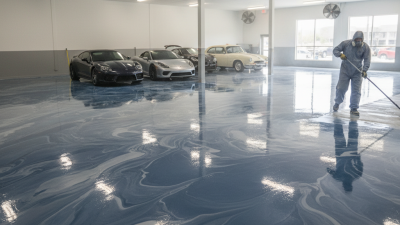
Metallic epoxy adds visual movement through reflective pigments and controlled application tools. Trowel direction, roller pressure, and lighting can create clouds, waves, or sharper patterns. No two floors look exactly alike. That variation attracts designers, but it can disappoint buyers expecting a perfectly uniform finish. Samples should be made on the actual substrate, under planned lighting. Metallic floors may also reveal scratches, dust, and uneven preparation more clearly. We once underestimated this effect on a bright sample, and the finished surface looked less forgiving. Buyers should compare chemical resistance, abrasion performance, cure time, and maintenance needs before approving a decorative system. Local installers need clear mixing ratios and application limits. Fancy appearance cannot repair weak preparation.

Novolac, Cycloaliphatic, and Anti-Slip Epoxies: Chemical and Safety Demands

Global buyers often compare seven epoxy families: standard, novolac, cycloaliphatic, water-based, solvent-free, anti-slip, and conductive. The difficult choice is not color. It is chemical exposure, wet-foot safety, temperature, and maintenance. Novolac epoxy suits acids, solvents, and aggressive cleaning areas. Cycloaliphatic epoxy offers stronger ultraviolet stability and better color retention outdoors. Anti-slip epoxy uses graded aggregate, but excessive texture traps dirt and complicates cleaning. ASTM D4060 abrasion testing reports mass loss after controlled Taber cycles, helping buyers compare wear resistance.

A glossy floor can look premium, yet become slick after oil or rain. The 2024 Workplace Safety Index reported more than 10 billion dollars in direct costs for same-level falls. That figure makes surface traction a purchasing issue, not decoration. Ask for wet dynamic coefficient data under ANSI A326.3 or an equivalent method. For novolac systems, request immersion data at the actual concentration and temperature. For cycloaliphatic systems, ask for accelerated ultraviolet and color-change results. These documents matter more than a glossy sample tile.

Tips: Define the spill, shoe, cleaning method, and temperature before requesting quotations. Check substrate moisture, cure window, and aggregate size. Specify safety data sheet access and local installation requirements. One weakness remains: laboratory data rarely mirrors every warehouse. Small pilot areas can expose failures early.

Global Buyer Matrix: ISO 12944 C1–CX, ASTM D4060, and Service Conditions

For global buyers, the “best” epoxy depends on exposure, not marketing language. A practical seven-type shortlist includes waterborne epoxy, solvent-free epoxy, epoxy mastic, novolac epoxy, glass-flake epoxy, flexible epoxy, and antistatic epoxy. Waterborne grades suit low-odor indoor work. Solvent-free systems help protect steel in tanks and heavy industrial areas. Epoxy mastic tolerates less-than-perfect surface preparation, although it cannot rescue loose rust.

The buyer matrix should begin with ISO 12944 corrosivity classes. C1 covers dry, heated interiors, while C2 suits low-humidity buildings. C3 includes urban or moderate industrial atmospheres. C4 and C5 demand stronger systems for coastal, chemical, or humid environments. CX applies to extreme marine or offshore exposure. These categories guide coating thickness, surface preparation, and maintenance planning. They do not approve one product automatically.

ASTM D4060 measures abrasion resistance through a rotating wheel test. It is useful for warehouses, walkways, and production floors where sand and forklift traffic cause wear. Novolac epoxy handles many aggressive chemicals. Glass-flake epoxy improves barrier protection in immersion service. Flexible epoxy performs better where steel moves or thermal cycling occurs. Antistatic epoxy supports controlled electrical environments, but grounding design remains essential. Field inspections show a recurring weakness: buyers often compare laboratory numbers without matching service conditions. A high abrasion result may still fail under constant immersion, poor drainage, or incorrect curing. A clean test panel can mislead. Temperature, humidity, salt contamination, and repair access deserve equal attention.

7 Best Epoxy Coating Types for Global Buyers? - Global Buyer Matrix: ISO 12944 C1–CX, ASTM D4060, and Service Conditions

Comparative buying matrix for industrial epoxy coating technologies. Suitability depends on the complete coating system, surface preparation, dry-film thickness, application conditions, and the required durability period.

Epoxy Coating Type Typical Chemistry and Main Use Best-Fit ISO 12944 Corrosivity Range Typical Service Conditions Indicative ASTM D4060 Abrasion Loss* Key Advantages Main Limitations Global Buyer Selection Guidance
High-Solids Epoxy Two-component epoxy with elevated volume solids and reduced solvent content; commonly used as an intermediate or finish coat for steel and concrete. C2–C5
May form part of CX systems when combined with a qualified primer and topcoat.
Fabricated steel, machinery, warehouses, tanks, pipework, bridges, and industrial floors with moderate chemical exposure. Approximately 40–90 mg loss under a common CS-17, 1,000-cycle, 1,000 g laboratory setup; verify the exact formulation and test report. Good corrosion protection, strong adhesion, comparatively low VOC potential, and broad availability. Chalking and color change under prolonged UV exposure; limited flexibility; recoat windows must be controlled. Suitable for general industrial procurement where balanced corrosion resistance, application efficiency, and cost are priorities.
Solvent-Free Epoxy Two-component, 100% solids or near-100% solids epoxy designed to cure with little or no solvent evaporation. C3–C5
Can be included in heavy-duty systems for severe environments when independently qualified.
Industrial floors, bunds, secondary containment, wastewater areas, sumps, tanks, and enclosed spaces where VOC reduction is important. Approximately 30–75 mg loss under a common CS-17, 1,000-cycle, 1,000 g setup; actual results depend strongly on aggregate, filler, and cure. High build per coat, low VOC emissions, good chemical resistance, and strong barrier protection. Requires accurate mixing and application control; can have limited working time and may be sensitive to low-temperature cure conditions. Good choice for enclosed facilities, thick-film protection, and projects with strict solvent-emission requirements.
Waterborne Epoxy Water-dispersed epoxy or epoxy-modified system; commonly used on concrete, masonry, and lightly to moderately corrosive indoor steel. C1–C3
Some formulations may support C4 applications only within a tested system.
Indoor floors, commercial buildings, warehouses, light manufacturing areas, and substrates where lower odor is required. Approximately 70–150 mg loss under a common CS-17, 1,000-cycle, 1,000 g setup; do not compare results without matching test conditions. Lower odor, easier cleanup, lower flammability during application, and practical use in occupied buildings. Generally lower early water and chemical resistance than solvent-free systems; humidity and substrate moisture can affect appearance and cure. Preferable for indoor projects, renovation work, and locations with ventilation or odor constraints rather than severe immersion service.
Epoxy Zinc-Rich Primer Two-component epoxy primer containing metallic zinc pigment; used as the corrosion-protective primer layer beneath compatible intermediate and finish coats. C3–C5
May be used in CX systems only as part of a complete, tested multi-coat system.
Structural steel, transmission structures, industrial equipment, marine-adjacent assets, and high-corrosion atmospheric exposure. Approximately 60–130 mg loss under a common CS-17, 1,000-cycle, 1,000 g setup; abrasion resistance is not its primary design function. Provides galvanic assistance when the zinc content and electrical continuity are adequate; strong foundation for multi-coat systems. Requires compatible overcoats and correct surface preparation; excessive zinc dust can affect application, porosity, and intercoat adhesion. Select when corrosion protection of prepared steel is the principal requirement; specify the complete ISO 12944 system, not the primer alone.
Epoxy Mastic Surface-tolerant, high-build epoxy designed for maintenance applications and less-than-perfectly prepared steel, subject to product limitations. C2–C4
Some systems can reach C5 with suitable preparation, thickness, and topcoat.
Maintenance painting, aged steel, agricultural equipment, industrial structures, and repair work with limited access or preparation time. Approximately 50–120 mg loss under a common CS-17, 1,000-cycle, 1,000 g setup; performance varies with pigment volume concentration and film build. Good wetting, high build, strong maintenance value, and tolerance of moderately irregular prepared surfaces. Not a substitute for proper abrasive blasting; may chalk in sunlight and may have lower ultimate performance than specialized systems. Useful for repair and maintenance contracts where access, shutdown time, and surface-preparation constraints dominate the buying decision.
Novolac Epoxy Epoxy resin system with additional aromatic functionality, formulated for enhanced chemical and temperature resistance. C3–C5
ISO atmospheric category is only one part of the specification; immersion compatibility must be separately confirmed.
Chemical storage areas, process plants, wastewater facilities, fuel-related containment, aggressive industrial floors, and selected immersion duties. Approximately 25–70 mg loss under a common CS-17, 1,000-cycle, 1,000 g setup; chemical resistance and cure quality are equally important. High chemical resistance, strong barrier properties, and better heat capability than many general-purpose epoxies. Higher material cost, shorter pot life in some formulations, and greater sensitivity to mixing ratio and application conditions. Choose for aggressive chemical exposure or containment service after confirming the exact chemical, concentration, temperature, and immersion duration.
Glass-Flake Epoxy Epoxy matrix reinforced with thin glass flakes that create a tortuous path for moisture and chemicals; commonly applied at high film thickness. C4–CX
Requires a project-specific, qualified system and detailed application controls.
Offshore and coastal steel, splash zones, marine structures, chemical plants, tanks, pipelines, and severe atmospheric or immersion-related exposure. Approximately 25–65 mg loss under a common CS-17, 1,000-cycle, 1,000 g setup; high-build texture and reinforcement can influence the result. Excellent barrier effect, strong resistance to permeation, high build, and good durability in severe service when correctly applied. More demanding application, higher cost, possible surface texture, and strict requirements for mixing, spray equipment, and film-thickness control. Best for high-consequence assets and severe environments where lifecycle protection is more important than the lowest initial coating cost.

ISO 12944 note: C1, C2, C3, C4, C5, and CX describe environmental corrosivity categories, ranging from very low atmospheric corrosivity to extreme offshore or aggressive atmospheric exposure. They do not independently certify a single coating product. The primer, intermediate coat, topcoat, dry-film thickness, surface preparation, application quality, and expected durability must be evaluated as a complete system.

ASTM D4060 note: Abrasion-loss figures above are indicative comparison ranges only, not guaranteed product ratings. ASTM D4060 results depend on wheel type, load, cycle count, curing conditions, film thickness, substrate, and test laboratory. Lower mass loss generally indicates better abrasion resistance under the selected test conditions.

Buyer verification checklist: Request the technical data sheet, safety data sheet, batch or quality certificate, ISO 12944 system specification, dry-film thickness schedule, surface-preparation standard, recoat interval, VOC information, chemical-resistance chart, and full ASTM D4060 test conditions before final approval.

Practical interpretation: Use high-solids or solvent-free epoxy for broad industrial protection, waterborne epoxy for lower-odor indoor work, epoxy zinc-rich primer for corrosion-focused steel systems, epoxy mastic for maintenance, novolac epoxy for chemical exposure, and glass-flake epoxy for severe barrier and marine-related service.